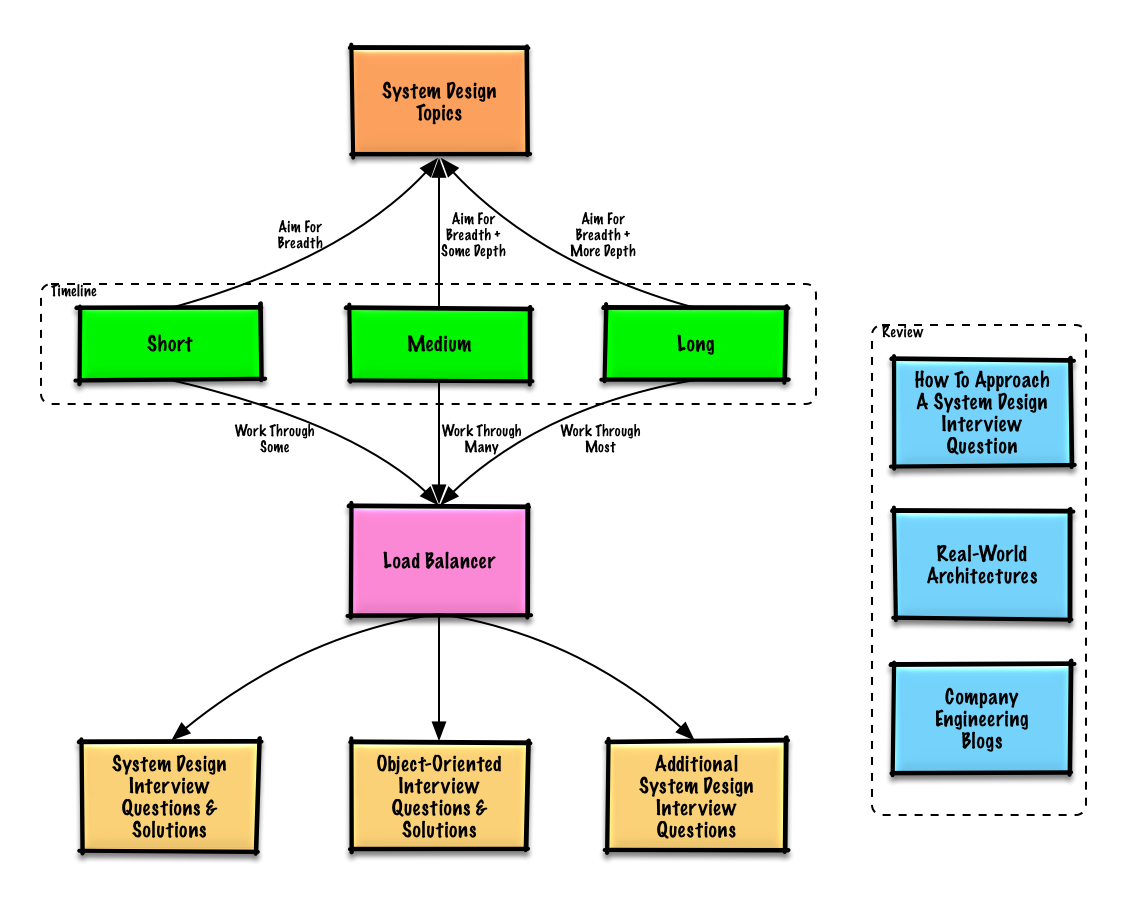
Suggested topics to review based on your interview timeline (short, medium, long).
Q: For interviews, do I need to know everything here?
A: No, you don't need to know everything here to prepare for the interview.
What you are asked in an interview depends on variables such as:
How much experience you have
What your technical background is
What positions you are interviewing for
Which companies you are interviewing with
Luck
More experienced candidates are generally expected to know more about system design. Architects or team leads might be expected to know more than individual contributors. Top tech companies are likely to have one or more design interview rounds.
Start broad and go deeper in a few areas. It helps to know a little about various key system design topics. Adjust the following guide based on your timeline, experience, what positions you are interviewing for, and which companies you are interviewing with.
Short timeline - Aim for breadth with system design topics. Practice by solving some interview questions.
Medium timeline - Aim for breadth and some depth with system design topics. Practice by solving many interview questions.
Long timeline - Aim for breadth and more depth with system design topics. Practice by solving most interview questions.
Short
Medium
Long
Read through the System design topics to get a broad understanding of how systems work
👍
👍
👍
Read through a few articles in the Company engineering blogs for the companies you are interviewing with
A service is scalable if it results in increased performance in a manner proportional to resources added. Generally, increasing performance means serving more units of work, but it can also be to handle larger units of work, such as when datasets grow.1
Another way to look at performance vs scalability:
If you have a performance problem, your system is slow for a single user.
If you have a scalability problem, your system is fast for a single user but slow under heavy load.
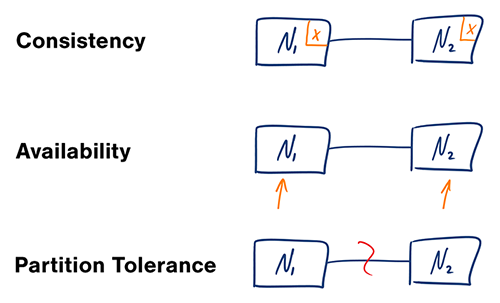
Waiting for a response from the partitioned node might result in a timeout error. CP is a good choice if your business needs require atomic reads and writes.
Responses return the most readily available version of the data available on any node, which might not be the latest. Writes might take some time to propagate when the partition is resolved.
AP is a good choice if the business needs to allow for eventual consistency or when the system needs to continue working despite external errors.
With multiple copies of the same data, we are faced with options on how to synchronize them so clients have a consistent view of the data. Recall the definition of consistency from the CAP theorem - Every read receives the most recent write or an error.
After a write, reads may or may not see it. A best effort approach is taken.
This approach is seen in systems such as memcached. Weak consistency works well in real time use cases such as VoIP, video chat, and realtime multiplayer games. For example, if you are on a phone call and lose reception for a few seconds, when you regain connection you do not hear what was spoken during connection loss.
With active-passive fail-over, heartbeats are sent between the active and the passive server on standby. If the heartbeat is interrupted, the passive server takes over the active's IP address and resumes service.
The length of downtime is determined by whether the passive server is already running in 'hot' standby or whether it needs to start up from 'cold' standby. Only the active server handles traffic.
Active-passive failover can also be referred to as master-slave failover.
In active-active, both servers are managing traffic, spreading the load between them.
If the servers are public-facing, the DNS would need to know about the public IPs of both servers. If the servers are internal-facing, application logic would need to know about both servers.
Active-active failover can also be referred to as master-master failover.
Availability is often quantified by uptime (or downtime) as a percentage of time the service is available. Availability is generally measured in number of 9s--a service with 99.99% availability is described as having four 9s.
If a service consists of multiple components prone to failure, the service's overall availability depends on whether the components are in sequence or in parallel.
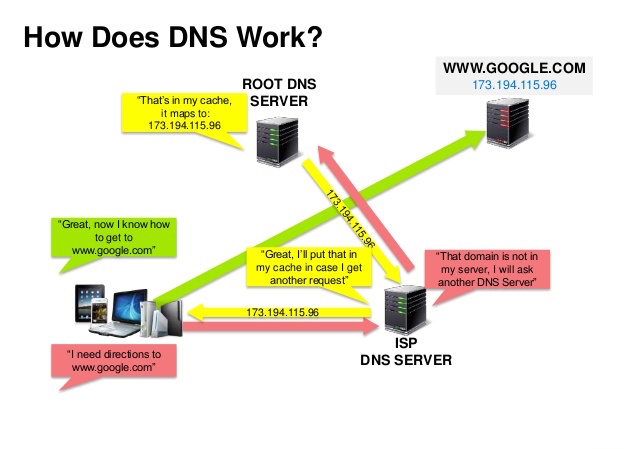
A Domain Name System (DNS) translates a domain name such as www.example.com to an IP address.
DNS is hierarchical, with a few authoritative servers at the top level. Your router or ISP provides information about which DNS server(s) to contact when doing a lookup. Lower level DNS servers cache mappings, which could become stale due to DNS propagation delays. DNS results can also be cached by your browser or OS for a certain period of time, determined by the time to live (TTL).
NS record (name server) - Specifies the DNS servers for your domain/subdomain.
MX record (mail exchange) - Specifies the mail servers for accepting messages.
A record (address) - Points a name to an IP address.
CNAME (canonical) - Points a name to another name or CNAME (example.com to www.example.com) or to an A record.
Services such as CloudFlare and Route 53 provide managed DNS services. Some DNS services can route traffic through various methods:
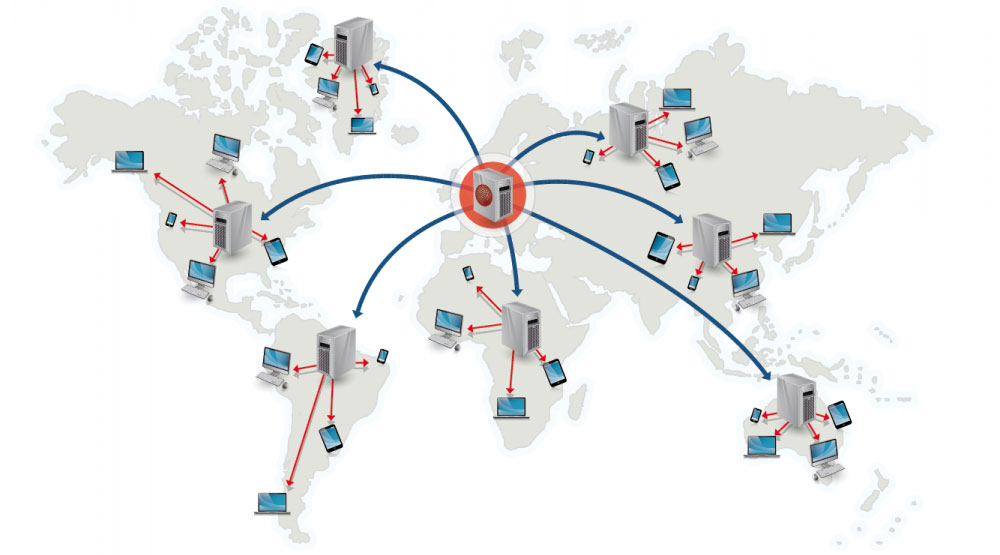
A content delivery network (CDN) is a globally distributed network of proxy servers, serving content from locations closer to the user. Generally, static files such as HTML/CSS/JS, photos, and videos are served from CDN, although some CDNs such as Amazon's CloudFront support dynamic content. The site's DNS resolution will tell clients which server to contact.
Serving content from CDNs can significantly improve performance in two ways:
Users receive content from data centers close to them
Your servers do not have to serve requests that the CDN fulfills
Push CDNs receive new content whenever changes occur on your server. You take full responsibility for providing content, uploading directly to the CDN and rewriting URLs to point to the CDN. You can configure when content expires and when it is updated. Content is uploaded only when it is new or changed, minimizing traffic, but maximizing storage.
Sites with a small amount of traffic or sites with content that isn't often updated work well with push CDNs. Content is placed on the CDNs once, instead of being re-pulled at regular intervals.
Pull CDNs grab new content from your server when the first user requests the content. You leave the content on your server and rewrite URLs to point to the CDN. This results in a slower request until the content is cached on the CDN.
A time-to-live (TTL) determines how long content is cached. Pull CDNs minimize storage space on the CDN, but can create redundant traffic if files expire and are pulled before they have actually changed.
Sites with heavy traffic work well with pull CDNs, as traffic is spread out more evenly with only recently-requested content remaining on the CDN.
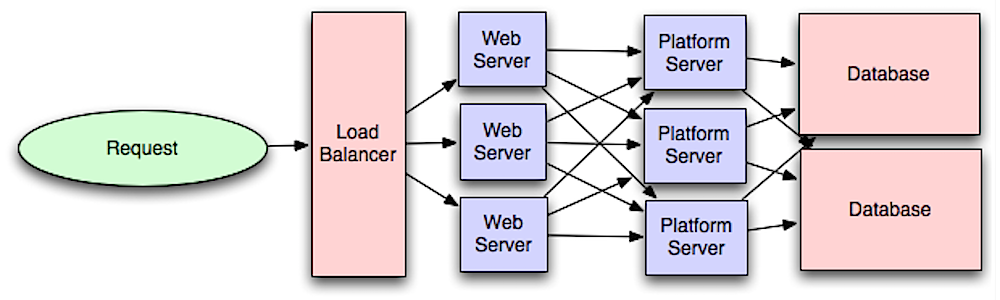
Load balancers distribute incoming client requests to computing resources such as application servers and databases. In each case, the load balancer returns the response from the computing resource to the appropriate client. Load balancers are effective at:
Preventing requests from going to unhealthy servers
Preventing overloading resources
Helping to eliminate a single point of failure
Load balancers can be implemented with hardware (expensive) or with software such as HAProxy.
Additional benefits include:
SSL termination - Decrypt incoming requests and encrypt server responses so backend servers do not have to perform these potentially expensive operations
Layer 4 load balancers look at info at the transport layer to decide how to distribute requests. Generally, this involves the source, destination IP addresses, and ports in the header, but not the contents of the packet. Layer 4 load balancers forward network packets to and from the upstream server, performing Network Address Translation (NAT).
Layer 7 load balancers look at the application layer to decide how to distribute requests. This can involve contents of the header, message, and cookies. Layer 7 load balancers terminate network traffic, reads the message, makes a load-balancing decision, then opens a connection to the selected server. For example, a layer 7 load balancer can direct video traffic to servers that host videos while directing more sensitive user billing traffic to security-hardened servers.
At the cost of flexibility, layer 4 load balancing requires less time and computing resources than Layer 7, although the performance impact can be minimal on modern commodity hardware.
Load balancers can also help with horizontal scaling, improving performance and availability. Scaling out using commodity machines is more cost efficient and results in higher availability than scaling up a single server on more expensive hardware, called Vertical Scaling. It is also easier to hire for talent working on commodity hardware than it is for specialized enterprise systems.
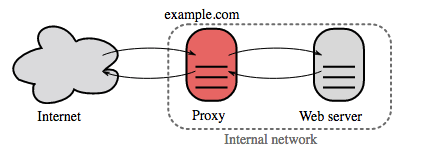
A reverse proxy is a web server that centralizes internal services and provides unified interfaces to the public. Requests from clients are forwarded to a server that can fulfill it before the reverse proxy returns the server's response to the client.
Additional benefits include:
Increased security - Hide information about backend servers, blacklist IPs, limit number of connections per client
Increased scalability and flexibility - Clients only see the reverse proxy's IP, allowing you to scale servers or change their configuration
SSL termination - Decrypt incoming requests and encrypt server responses so backend servers do not have to perform these potentially expensive operations
Separating out the web layer from the application layer (also known as platform layer) allows you to scale and configure both layers independently. Adding a new API results in adding application servers without necessarily adding additional web servers. The single responsibility principle advocates for small and autonomous services that work together. Small teams with small services can plan more aggressively for rapid growth.
Workers in the application layer also help enable asynchronism.
Related to this discussion are microservices, which can be described as a suite of independently deployable, small, modular services. Each service runs a unique process and communicates through a well-defined, lightweight mechanism to serve a business goal. 1
Pinterest, for example, could have the following microservices: user profile, follower, feed, search, photo upload, etc.
Systems such as Consul, Etcd, and Zookeeper can help services find each other by keeping track of registered names, addresses, and ports. Health checks help verify service integrity and are often done using an HTTP endpoint. Both Consul and Etcd have a built in key-value store that can be useful for storing config values and other shared data.
Adding an application layer with loosely coupled services requires a different approach from an architectural, operations, and process viewpoint (vs a monolithic system).
Microservices can add complexity in terms of deployments and operations.
A relational database like SQL is a collection of data items organized in tables.
ACID is a set of properties of relational database transactions.
Atomicity - Each transaction is all or nothing
Consistency - Any transaction will bring the database from one valid state to another
Isolation - Executing transactions concurrently has the same results as if the transactions were executed serially
Durability - Once a transaction has been committed, it will remain so
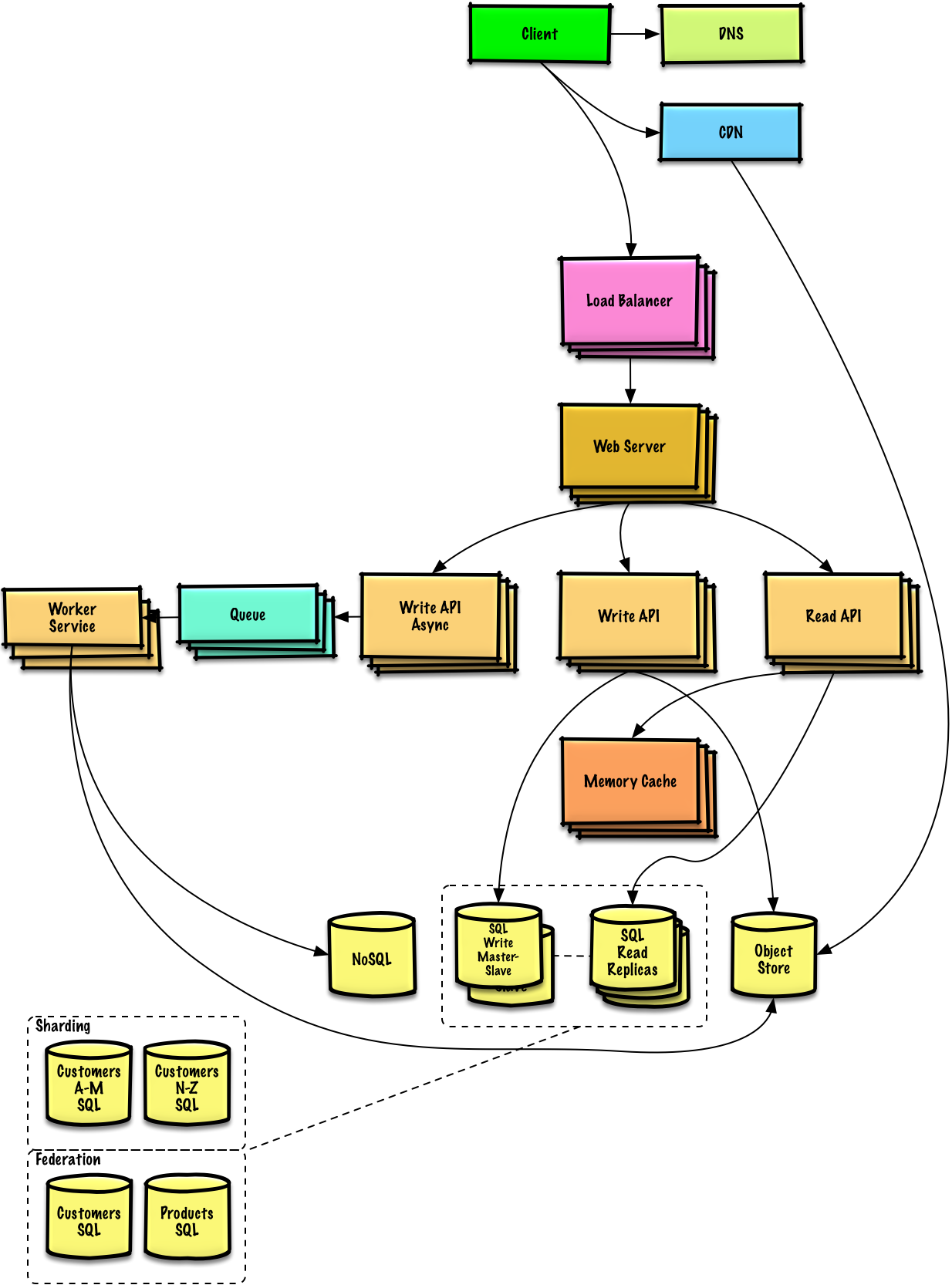
There are many techniques to scale a relational database: master-slave replication, master-master replication, federation, sharding, denormalization, and SQL tuning.
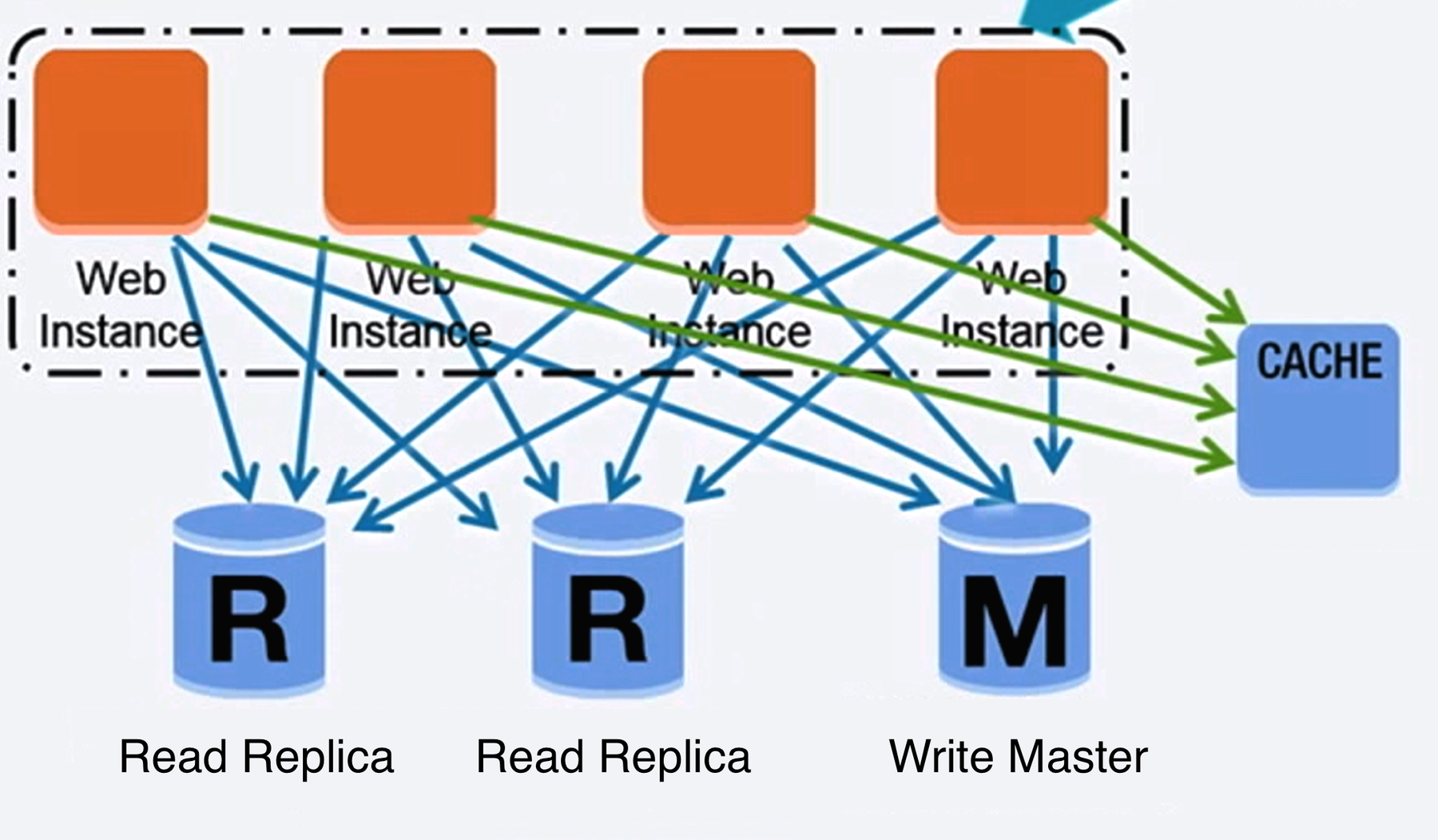
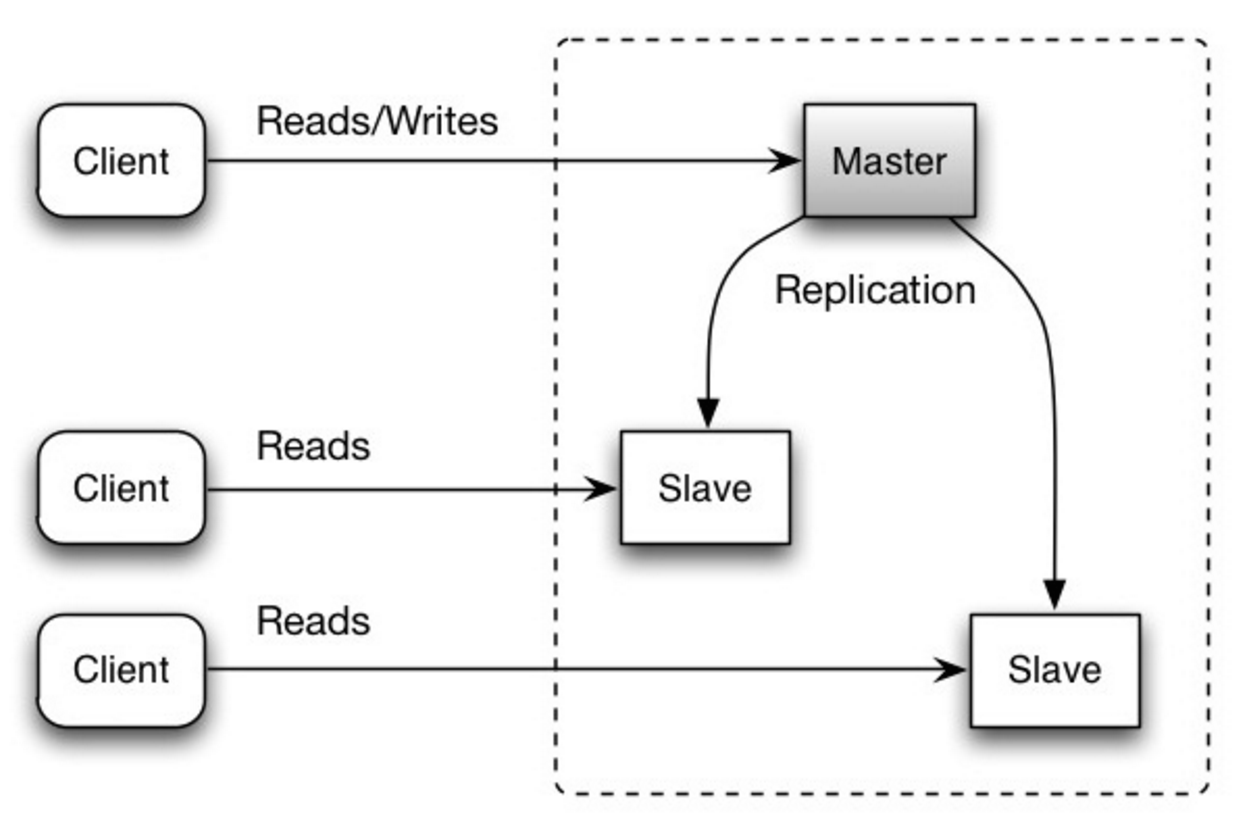
The master serves reads and writes, replicating writes to one or more slaves, which serve only reads. Slaves can also replicate to additional slaves in a tree-like fashion. If the master goes offline, the system can continue to operate in read-only mode until a slave is promoted to a master or a new master is provisioned.
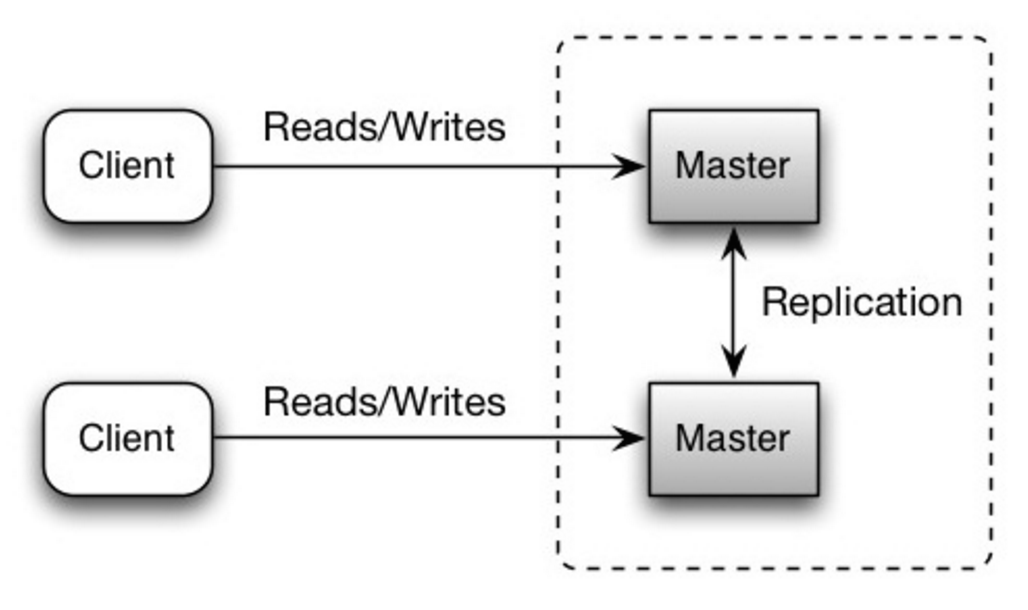
Both masters serve reads and writes and coordinate with each other on writes. If either master goes down, the system can continue to operate with both reads and writes.
There is a potential for loss of data if the master fails before any newly written data can be replicated to other nodes.
Writes are replayed to the read replicas. If there are a lot of writes, the read replicas can get bogged down with replaying writes and can't do as many reads.
The more read slaves, the more you have to replicate, which leads to greater replication lag.
On some systems, writing to the master can spawn multiple threads to write in parallel, whereas read replicas only support writing sequentially with a single thread.
Replication adds more hardware and additional complexity.
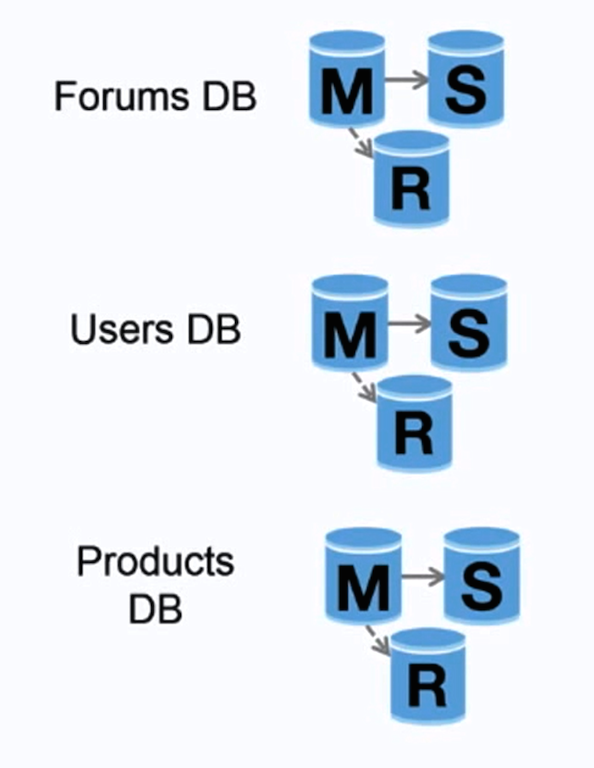
Federation (or functional partitioning) splits up databases by function. For example, instead of a single, monolithic database, you could have three databases: forums, users, and products, resulting in less read and write traffic to each database and therefore less replication lag. Smaller databases result in more data that can fit in memory, which in turn results in more cache hits due to improved cache locality. With no single central master serializing writes you can write in parallel, increasing throughput.
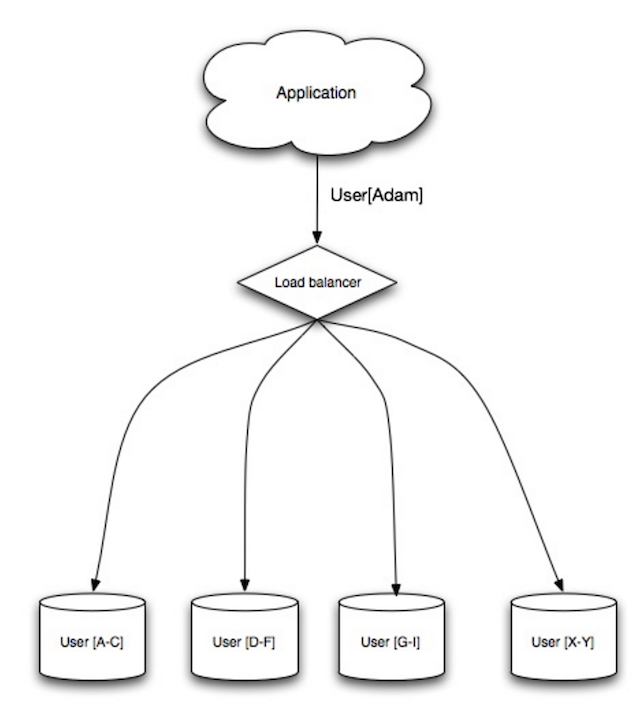
Sharding distributes data across different databases such that each database can only manage a subset of the data. Taking a users database as an example, as the number of users increases, more shards are added to the cluster.
Similar to the advantages of federation, sharding results in less read and write traffic, less replication, and more cache hits. Index size is also reduced, which generally improves performance with faster queries. If one shard goes down, the other shards are still operational, although you'll want to add some form of replication to avoid data loss. Like federation, there is no single central master serializing writes, allowing you to write in parallel with increased throughput.
Common ways to shard a table of users is either through the user's last name initial or the user's geographic location.
You'll need to update your application logic to work with shards, which could result in complex SQL queries.
Data distribution can become lopsided in a shard. For example, a set of power users on a shard could result in increased load to that shard compared to others.
Rebalancing adds additional complexity. A sharding function based on consistent hashing can reduce the amount of transferred data.
Joining data from multiple shards is more complex.
Sharding adds more hardware and additional complexity.
Denormalization attempts to improve read performance at the expense of some write performance. Redundant copies of the data are written in multiple tables to avoid expensive joins. Some RDBMS such as PostgreSQL and Oracle support materialized views which handle the work of storing redundant information and keeping redundant copies consistent.
Once data becomes distributed with techniques such as federation and sharding, managing joins across data centers further increases complexity. Denormalization might circumvent the need for such complex joins.
In most systems, reads can heavily outnumber writes 100:1 or even 1000:1. A read resulting in a complex database join can be very expensive, spending a significant amount of time on disk operations.
MySQL dumps to disk in contiguous blocks for fast access.
Use CHAR instead of VARCHAR for fixed-length fields.
CHAR effectively allows for fast, random access, whereas with VARCHAR, you must find the end of a string before moving onto the next one.
Use TEXT for large blocks of text such as blog posts. TEXT also allows for boolean searches. Using a TEXT field results in storing a pointer on disk that is used to locate the text block.
Use INT for larger numbers up to 2^32 or 4 billion.
Use DECIMAL for currency to avoid floating point representation errors.
Avoid storing large BLOBS, store the location of where to get the object instead.
VARCHAR(255) is the largest number of characters that can be counted in an 8 bit number, often maximizing the use of a byte in some RDBMS.
Columns that you are querying (SELECT, GROUP BY, ORDER BY, JOIN) could be faster with indices.
Indices are usually represented as self-balancing B-tree that keeps data sorted and allows searches, sequential access, insertions, and deletions in logarithmic time.
Placing an index can keep the data in memory, requiring more space.
Writes could also be slower since the index also needs to be updated.
When loading large amounts of data, it might be faster to disable indices, load the data, then rebuild the indices.
NoSQL is a collection of data items represented in a key-value store, document store, wide column store, or a graph database. Data is denormalized, and joins are generally done in the application code. Most NoSQL stores lack true ACID transactions and favor eventual consistency.
BASE is often used to describe the properties of NoSQL databases. In comparison with the CAP Theorem, BASE chooses availability over consistency.
Basically available - the system guarantees availability.
Soft state - the state of the system may change over time, even without input.
Eventual consistency - the system will become consistent over a period of time, given that the system doesn't receive input during that period.
In addition to choosing between SQL or NoSQL, it is helpful to understand which type of NoSQL database best fits your use case(s). We'll review key-value stores, document stores, wide column stores, and graph databases in the next section.
A key-value store generally allows for O(1) reads and writes and is often backed by memory or SSD. Data stores can maintain keys in lexicographic order, allowing efficient retrieval of key ranges. Key-value stores can allow for storing of metadata with a value.
Key-value stores provide high performance and are often used for simple data models or for rapidly-changing data, such as an in-memory cache layer. Since they offer only a limited set of operations, complexity is shifted to the application layer if additional operations are needed.
A key-value store is the basis for more complex systems such as a document store, and in some cases, a graph database.
Abstraction: key-value store with documents stored as values
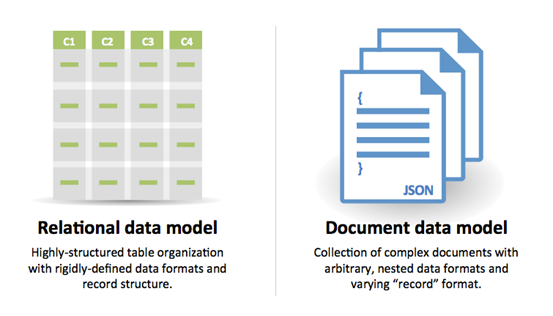
A document store is centered around documents (XML, JSON, binary, etc), where a document stores all information for a given object. Document stores provide APIs or a query language to query based on the internal structure of the document itself. Note, many key-value stores include features for working with a value's metadata, blurring the lines between these two storage types.
Based on the underlying implementation, documents are organized by collections, tags, metadata, or directories. Although documents can be organized or grouped together, documents may have fields that are completely different from each other.
Some document stores like MongoDB and CouchDB also provide a SQL-like language to perform complex queries. DynamoDB supports both key-values and documents.
Document stores provide high flexibility and are often used for working with occasionally changing data.
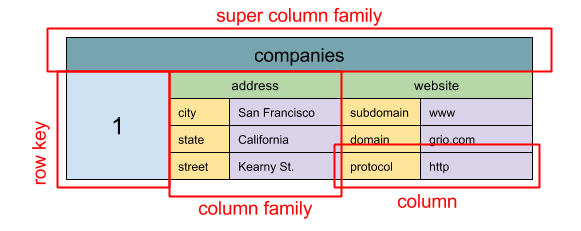
A wide column store's basic unit of data is a column (name/value pair). A column can be grouped in column families (analogous to a SQL table). Super column families further group column families. You can access each column independently with a row key, and columns with the same row key form a row. Each value contains a timestamp for versioning and for conflict resolution.
Google introduced Bigtable as the first wide column store, which influenced the open-source HBase often-used in the Hadoop ecosystem, and Cassandra from Facebook. Stores such as BigTable, HBase, and Cassandra maintain keys in lexicographic order, allowing efficient retrieval of selective key ranges.
Wide column stores offer high availability and high scalability. They are often used for very large data sets.
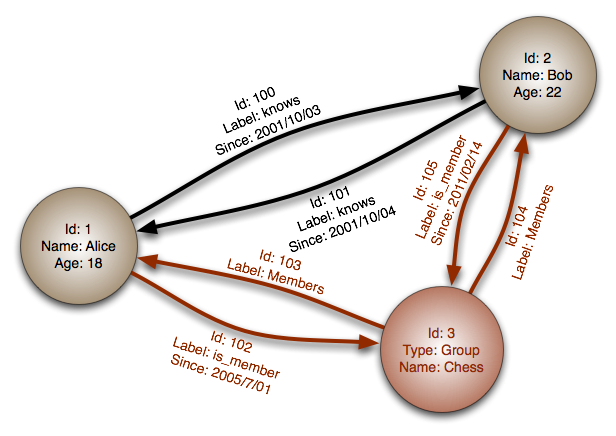
In a graph database, each node is a record and each arc is a relationship between two nodes. Graph databases are optimized to represent complex relationships with many foreign keys or many-to-many relationships.
Graphs databases offer high performance for data models with complex relationships, such as a social network. They are relatively new and are not yet widely-used; it might be more difficult to find development tools and resources. Many graphs can only be accessed with REST APIs.
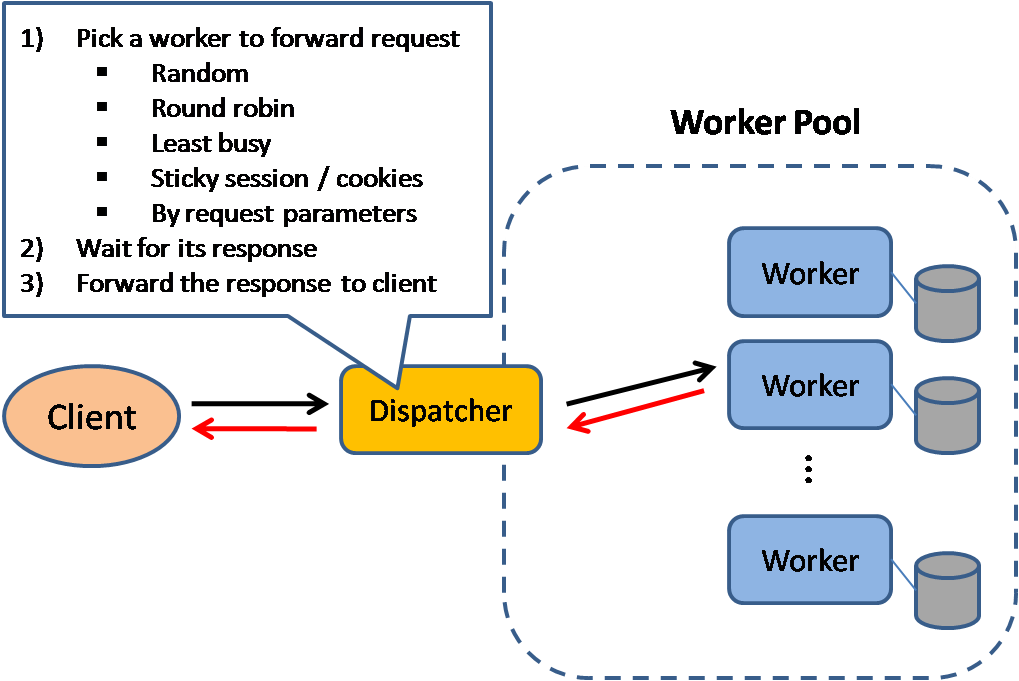
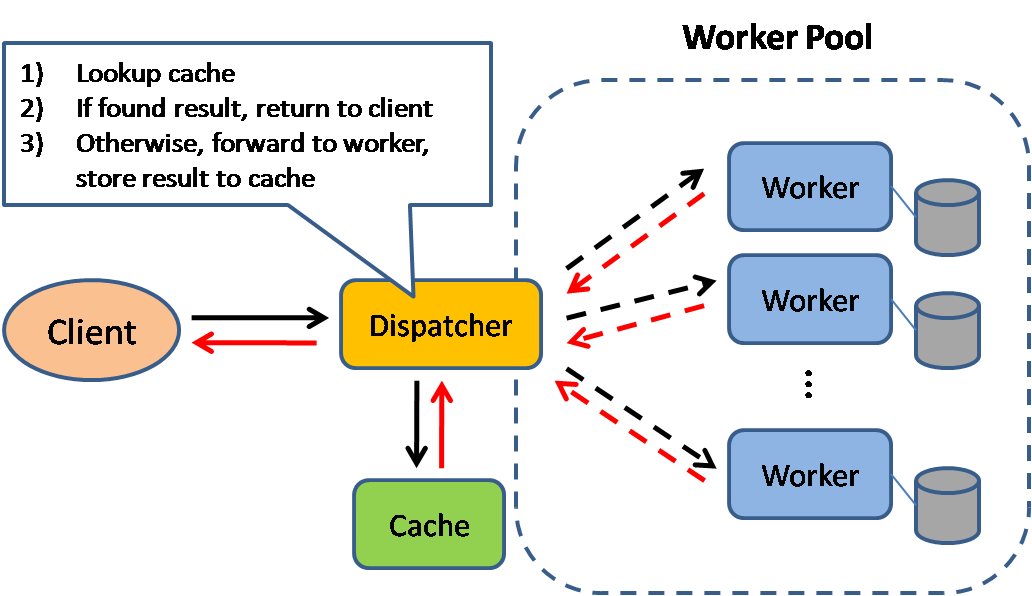
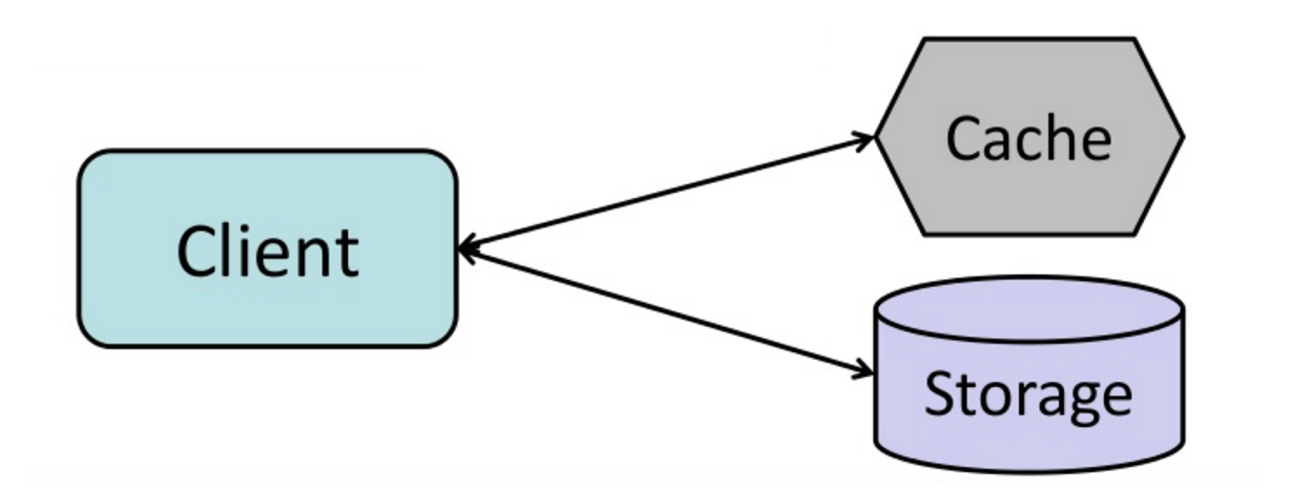
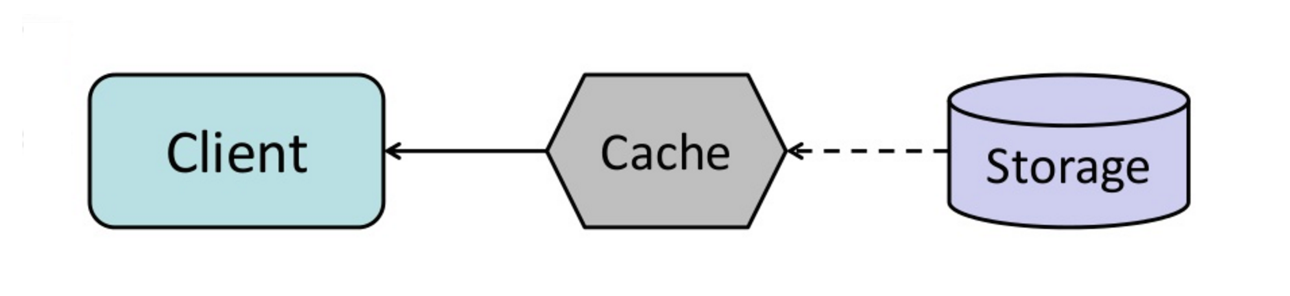
Caching improves page load times and can reduce the load on your servers and databases. In this model, the dispatcher will first lookup if the request has been made before and try to find the previous result to return, in order to save the actual execution.
Databases often benefit from a uniform distribution of reads and writes across its partitions. Popular items can skew the distribution, causing bottlenecks. Putting a cache in front of a database can help absorb uneven loads and spikes in traffic.
Reverse proxies and caches such as Varnish can serve static and dynamic content directly. Web servers can also cache requests, returning responses without having to contact application servers.
Your database usually includes some level of caching in a default configuration, optimized for a generic use case. Tweaking these settings for specific usage patterns can further boost performance.
In-memory caches such as Memcached and Redis are key-value stores between your application and your data storage. Since the data is held in RAM, it is much faster than typical databases where data is stored on disk. RAM is more limited than disk, so cache invalidation algorithms such as least recently used (LRU) can help invalidate 'cold' entries and keep 'hot' data in RAM.
Redis has the following additional features:
Persistence option
Built-in data structures such as sorted sets and lists
There are multiple levels you can cache that fall into two general categories: database queries and objects:
Row level
Query-level
Fully-formed serializable objects
Fully-rendered HTML
Generally, you should try to avoid file-based caching, as it makes cloning and auto-scaling more difficult.
See your data as an object, similar to what you do with your application code. Have your application assemble the dataset from the database into a class instance or a data structure(s):
Remove the object from cache if its underlying data has changed
Allows for asynchronous processing: workers assemble objects by consuming the latest cached object
The application is responsible for reading and writing from storage. The cache does not interact with storage directly. The application does the following:
Look for entry in cache, resulting in a cache miss
Load entry from the database
Add entry to cache
Return entry
defget_user(self,user_id):user=cache.get("user.{0}",user_id)ifuserisNone:user=db.query("SELECT * FROM users WHERE user_id = {0}",user_id)ifuserisnotNone:key="user.{0}".format(user_id)cache.set(key,json.dumps(user))returnuser
Subsequent reads of data added to cache are fast. Cache-aside is also referred to as lazy loading. Only requested data is cached, which avoids filling up the cache with data that isn't requested.
Each cache miss results in three trips, which can cause a noticeable delay.
Data can become stale if it is updated in the database. This issue is mitigated by setting a time-to-live (TTL) which forces an update of the cache entry, or by using write-through.
When a node fails, it is replaced by a new, empty node, increasing latency.
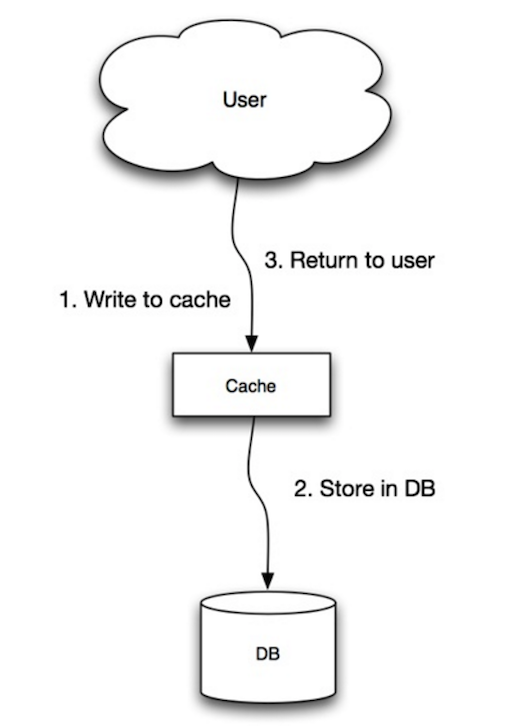
The application uses the cache as the main data store, reading and writing data to it, while the cache is responsible for reading and writing to the database:
Application adds/updates entry in cache
Cache synchronously writes entry to data store
Return
Application code:
set_user(12345,{"foo":"bar"})
Cache code:
defset_user(user_id,values):user=db.query("UPDATE Users WHERE id = {0}",user_id,values)cache.set(user_id,user)
Write-through is a slow overall operation due to the write operation, but subsequent reads of just written data are fast. Users are generally more tolerant of latency when updating data than reading data. Data in the cache is not stale.
When a new node is created due to failure or scaling, the new node will not cache entries until the entry is updated in the database. Cache-aside in conjunction with write through can mitigate this issue.
Most data written might never be read, which can be minimized with a TTL.
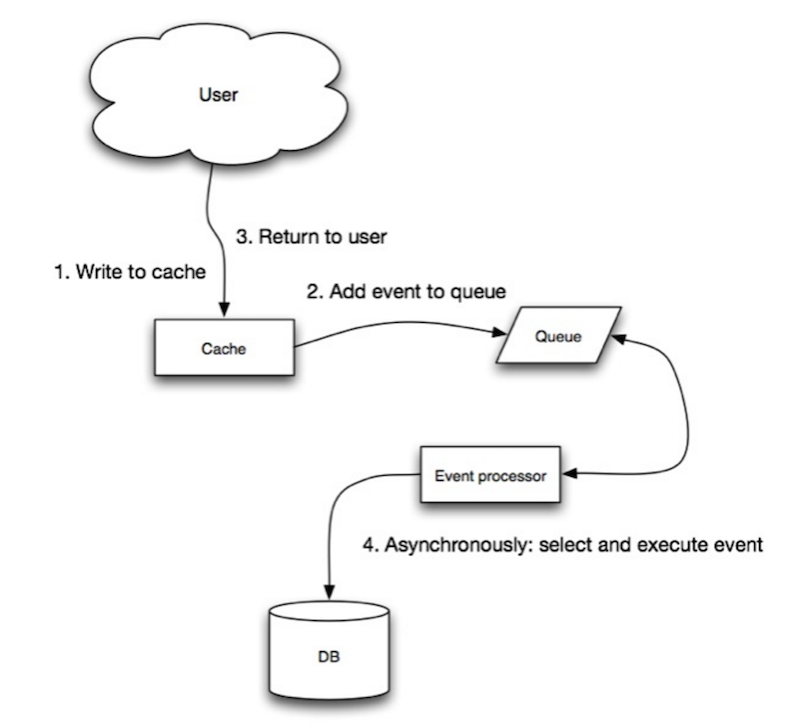
Asynchronous workflows help reduce request times for expensive operations that would otherwise be performed in-line. They can also help by doing time-consuming work in advance, such as periodic aggregation of data.
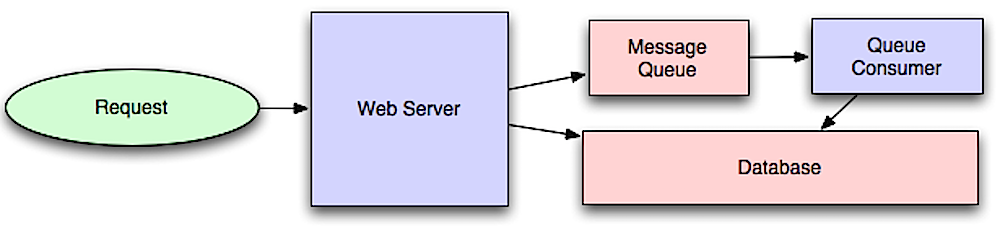
Message queues receive, hold, and deliver messages. If an operation is too slow to perform inline, you can use a message queue with the following workflow:
An application publishes a job to the queue, then notifies the user of job status
A worker picks up the job from the queue, processes it, then signals the job is complete
The user is not blocked and the job is processed in the background. During this time, the client might optionally do a small amount of processing to make it seem like the task has completed. For example, if posting a tweet, the tweet could be instantly posted to your timeline, but it could take some time before your tweet is actually delivered to all of your followers.
Redis is useful as a simple message broker but messages can be lost.
RabbitMQ is popular but requires you to adapt to the 'AMQP' protocol and manage your own nodes.
Amazon SQS is hosted but can have high latency and has the possibility of messages being delivered twice.
Tasks queues receive tasks and their related data, runs them, then delivers their results. They can support scheduling and can be used to run computationally-intensive jobs in the background.
Celery has support for scheduling and primarily has python support.
If queues start to grow significantly, the queue size can become larger than memory, resulting in cache misses, disk reads, and even slower performance. Back pressure can help by limiting the queue size, thereby maintaining a high throughput rate and good response times for jobs already in the queue. Once the queue fills up, clients get a server busy or HTTP 503 status code to try again later. Clients can retry the request at a later time, perhaps with exponential backoff.
Use cases such as inexpensive calculations and realtime workflows might be better suited for synchronous operations, as introducing queues can add delays and complexity.
HTTP is a method for encoding and transporting data between a client and a server. It is a request/response protocol: clients issue requests and servers issue responses with relevant content and completion status info about the request. HTTP is self-contained, allowing requests and responses to flow through many intermediate routers and servers that perform load balancing, caching, encryption, and compression.
A basic HTTP request consists of a verb (method) and a resource (endpoint). Below are common HTTP verbs:
Verb
Description
Idempotent*
Safe
Cacheable
GET
Reads a resource
Yes
Yes
Yes
POST
Creates a resource or trigger a process that handles data
No
No
Yes if response contains freshness info
PUT
Creates or replace a resource
Yes
No
No
PATCH
Partially updates a resource
No
No
Yes if response contains freshness info
DELETE
Deletes a resource
Yes
No
No
*Can be called many times without different outcomes.
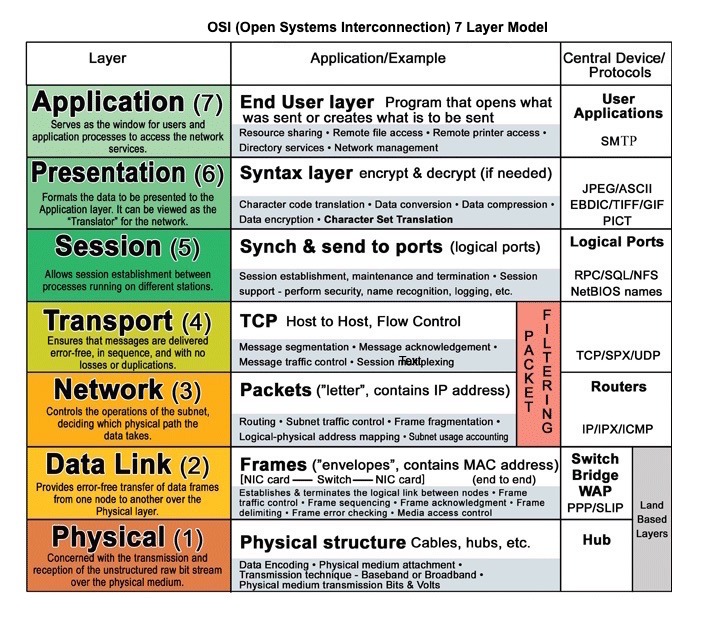
HTTP is an application layer protocol relying on lower-level protocols such as TCP and UDP.
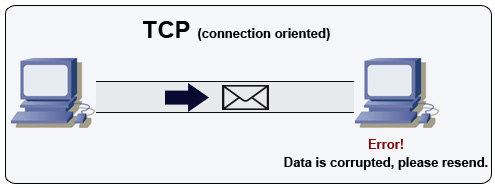
TCP is a connection-oriented protocol over an IP network. Connection is established and terminated using a handshake. All packets sent are guaranteed to reach the destination in the original order and without corruption through:
If the sender does not receive a correct response, it will resend the packets. If there are multiple timeouts, the connection is dropped. TCP also implements flow control and congestion control. These guarantees cause delays and generally result in less efficient transmission than UDP.
To ensure high throughput, web servers can keep a large number of TCP connections open, resulting in high memory usage. It can be expensive to have a large number of open connections between web server threads and say, a memcached server. Connection pooling can help in addition to switching to UDP where applicable.
TCP is useful for applications that require high reliability but are less time critical. Some examples include web servers, database info, SMTP, FTP, and SSH.
Use TCP over UDP when:
You need all of the data to arrive intact
You want to automatically make a best estimate use of the network throughput
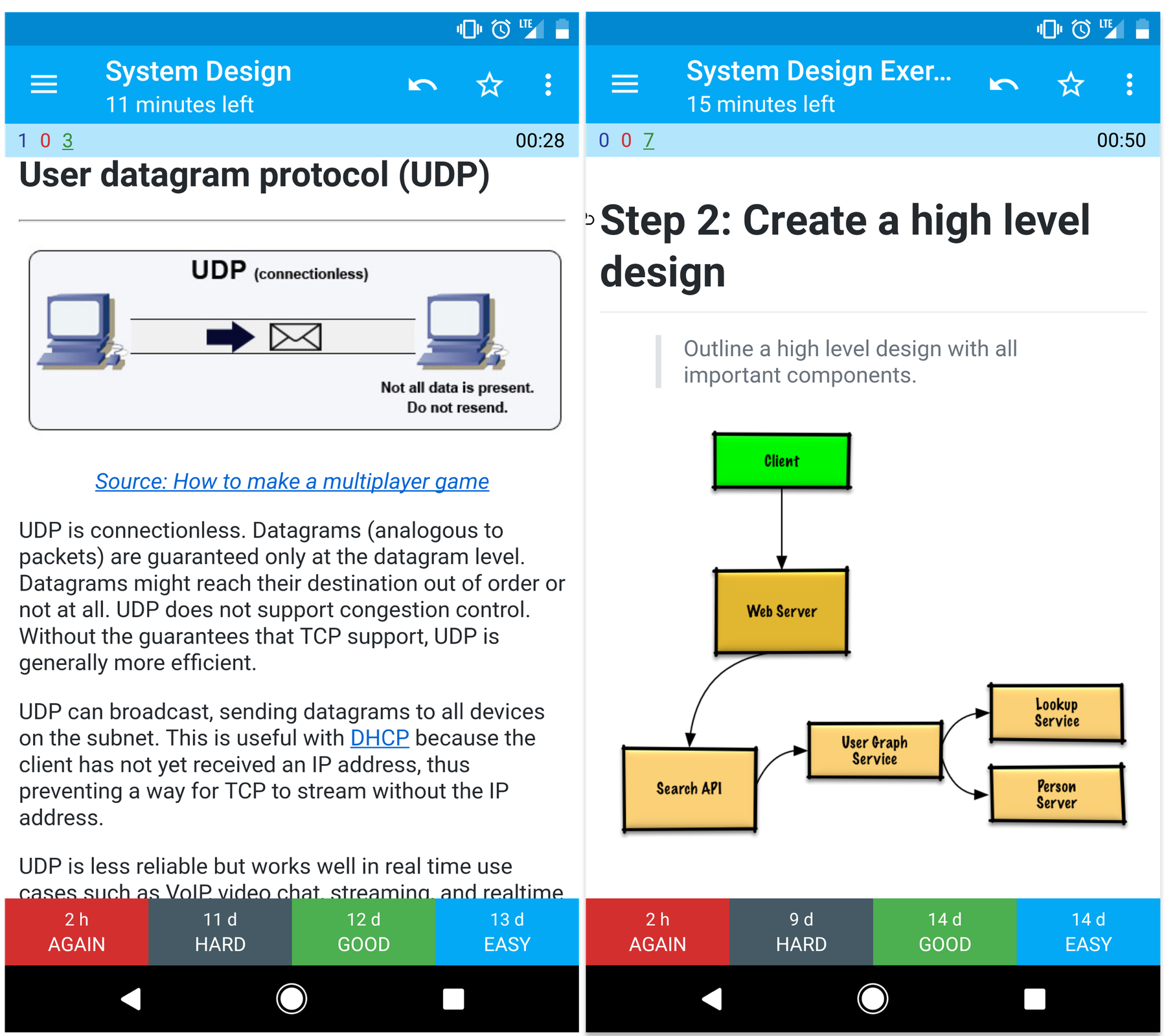
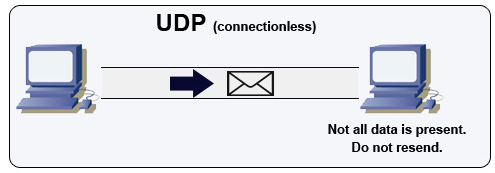
UDP is connectionless. Datagrams (analogous to packets) are guaranteed only at the datagram level. Datagrams might reach their destination out of order or not at all. UDP does not support congestion control. Without the guarantees that TCP support, UDP is generally more efficient.
UDP can broadcast, sending datagrams to all devices on the subnet. This is useful with DHCP because the client has not yet received an IP address, thus preventing a way for TCP to stream without the IP address.
UDP is less reliable but works well in real time use cases such as VoIP, video chat, streaming, and realtime multiplayer games.
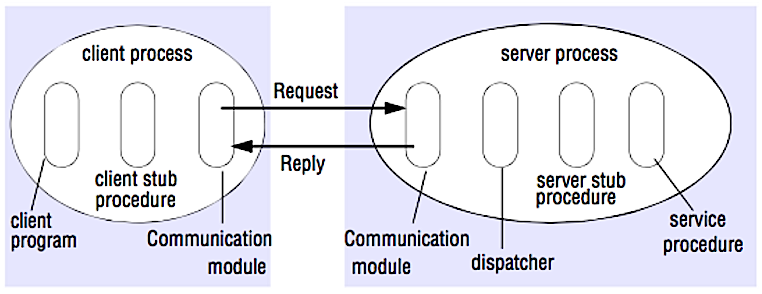
In an RPC, a client causes a procedure to execute on a different address space, usually a remote server. The procedure is coded as if it were a local procedure call, abstracting away the details of how to communicate with the server from the client program. Remote calls are usually slower and less reliable than local calls so it is helpful to distinguish RPC calls from local calls. Popular RPC frameworks include Protobuf, Thrift, and Avro.
RPC is a request-response protocol:
Client program - Calls the client stub procedure. The parameters are pushed onto the stack like a local procedure call.
Client stub procedure - Marshals (packs) procedure id and arguments into a request message.
Client communication module - OS sends the message from the client to the server.
Server communication module - OS passes the incoming packets to the server stub procedure.
Server stub procedure - Unmarshalls the results, calls the server procedure matching the procedure id and passes the given arguments.
The server response repeats the steps above in reverse order.
Sample RPC calls:
GET /someoperation?data=anId

POST /anotheroperation
{
  "data":"anId";
  "anotherdata": "another value"
}
RPC is focused on exposing behaviors. RPCs are often used for performance reasons with internal communications, as you can hand-craft native calls to better fit your use cases.
Choose a native library (aka SDK) when:
You know your target platform.
You want to control how your "logic" is accessed.
You want to control how error control happens off your library.
Performance and end user experience is your primary concern.
HTTP APIs following REST tend to be used more often for public APIs.
RPC clients become tightly coupled to the service implementation.
A new API must be defined for every new operation or use case.
It can be difficult to debug RPC.
You might not be able to leverage existing technologies out of the box. For example, it might require additional effort to ensure RPC calls are properly cached on caching servers such as Squid.
REST is an architectural style enforcing a client/server model where the client acts on a set of resources managed by the server. The server provides a representation of resources and actions that can either manipulate or get a new representation of resources. All communication must be stateless and cacheable.
There are four qualities of a RESTful interface:
Identify resources (URI in HTTP) - use the same URI regardless of any operation.
Change with representations (Verbs in HTTP) - use verbs, headers, and body.
Self-descriptive error message (status response in HTTP) - Use status codes, don't reinvent the wheel.
HATEOAS (HTML interface for HTTP) - your web service should be fully accessible in a browser.
Sample REST calls:
GET /someresources/anId

PUT /someresources/anId
{"anotherdata": "another value"}
REST is focused on exposing data. It minimizes the coupling between client/server and is often used for public HTTP APIs. REST uses a more generic and uniform method of exposing resources through URIs, representation through headers, and actions through verbs such as GET, POST, PUT, DELETE, and PATCH. Being stateless, REST is great for horizontal scaling and partitioning.
With REST being focused on exposing data, it might not be a good fit if resources are not naturally organized or accessed in a simple hierarchy. For example, returning all updated records from the past hour matching a particular set of events is not easily expressed as a path. With REST, it is likely to be implemented with a combination of URI path, query parameters, and possibly the request body.
REST typically relies on a few verbs (GET, POST, PUT, DELETE, and PATCH) which sometimes doesn't fit your use case. For example, moving expired documents to the archive folder might not cleanly fit within these verbs.
Fetching complicated resources with nested hierarchies requires multiple round trips between the client and server to render single views, e.g. fetching content of a blog entry and the comments on that entry. For mobile applications operating in variable network conditions, these multiple roundtrips are highly undesirable.
Over time, more fields might be added to an API response and older clients will receive all new data fields, even those that they do not need, as a result, it bloats the payload size and leads to larger latencies.
This section could use some updates. Consider contributing!
Security is a broad topic. Unless you have considerable experience, a security background, or are applying for a position that requires knowledge of security, you probably won't need to know more than the basics:
Encrypt in transit and at rest.
Sanitize all user inputs or any input parameters exposed to user to prevent XSS and SQL injection.
Use parameterized queries to prevent SQL injection.
Note: This document links directly to relevant areas found in the system design topics to avoid duplication. Refer to the linked content for general talking points, tradeoffs, and alternatives.
Design Bit.ly - is a similar question, except pastebin requires storing the paste contents instead of the original unshortened url.
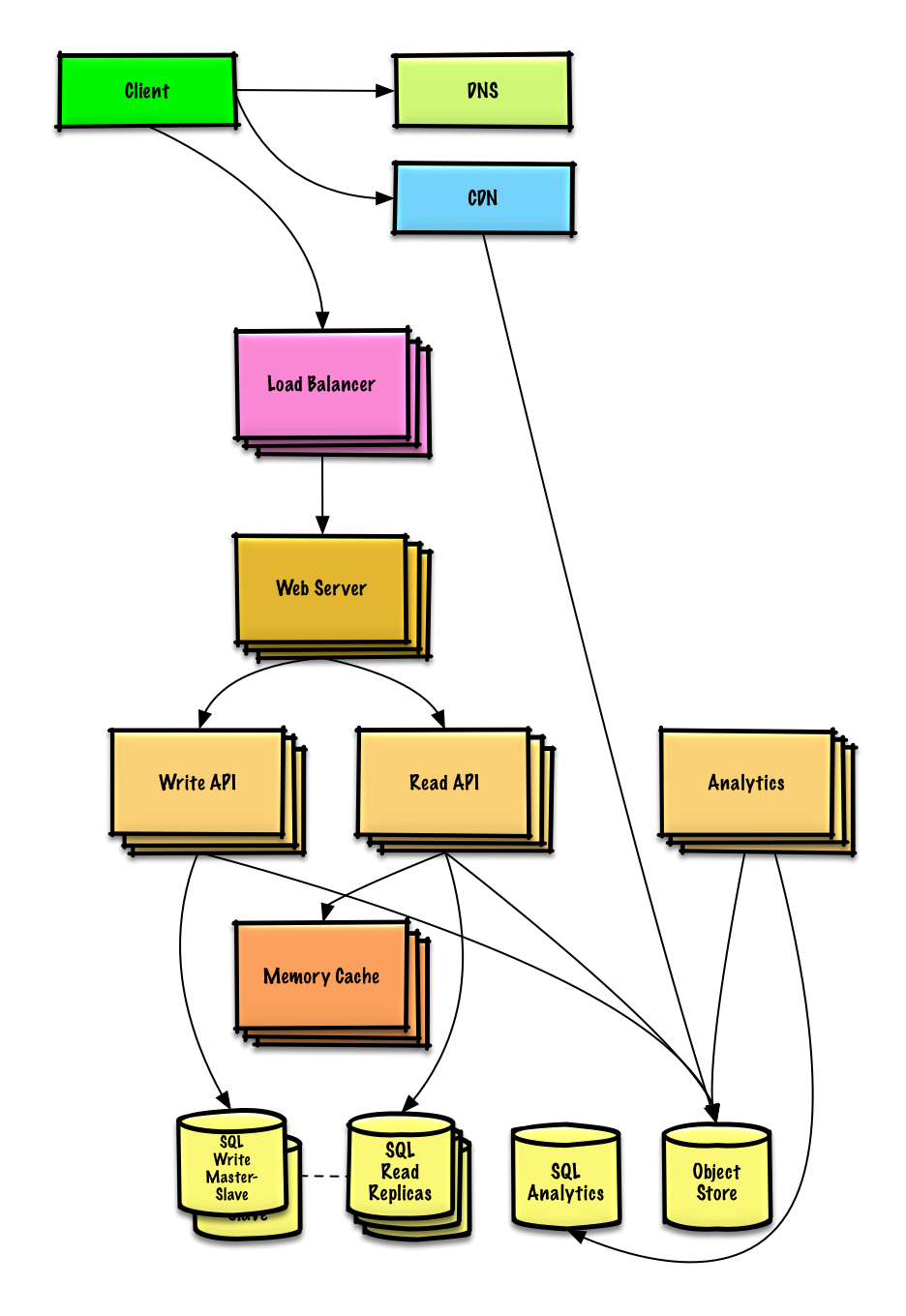
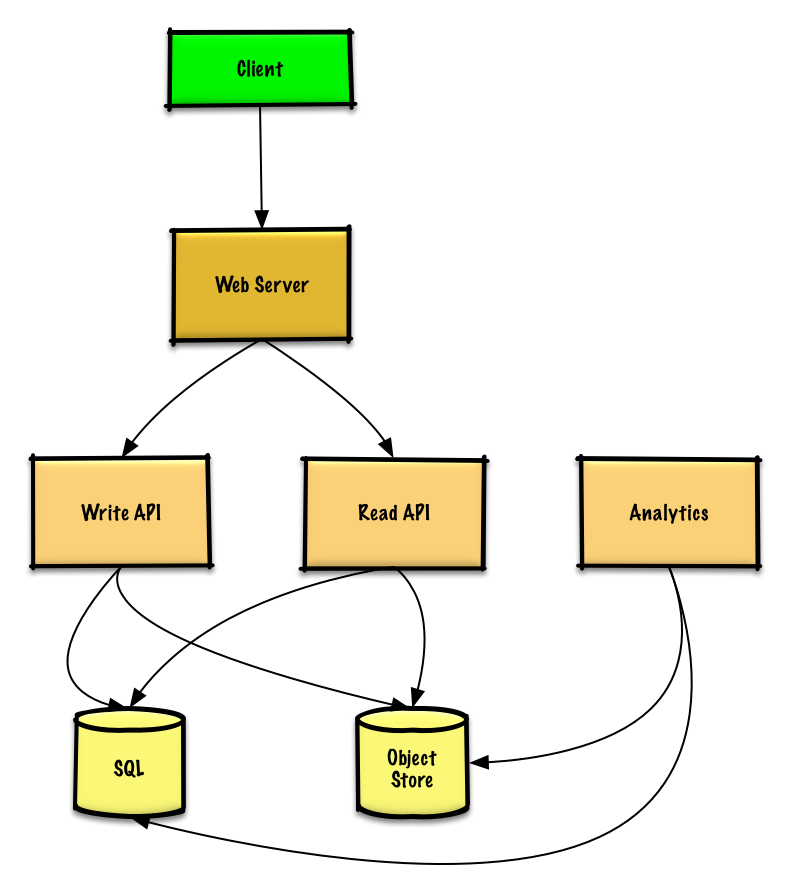
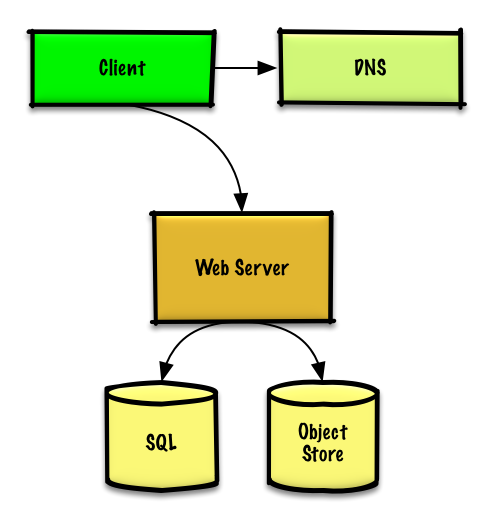
The Client sends a create paste request to the Web Server, running as a reverse proxy
The Web Server forwards the request to the Write API server
The Write API server does the following:
Generates a unique url
Checks if the url is unique by looking at the SQL Database for a duplicate
If the url is not unique, it generates another url
If we supported a custom url, we could use the user-supplied (also check for a duplicate)
Saves to the SQL Databasepastes table
Saves the paste data to the Object Store
Returns the url
Clarify with your interviewer how much code you are expected to write.
The pastes table could have the following structure:
shortlink char(7) NOT NULL
expiration_length_in_minutes int NOT NULL
created_at datetime NOT NULL
paste_path varchar(255) NOT NULL
PRIMARY KEY(shortlink)
Setting the primary key to be based on the shortlink column creates an index that the database uses to enforce uniqueness. We'll create an additional index on created_at to speed up lookups (log-time instead of scanning the entire table) and to keep the data in memory. Reading 1 MB sequentially from memory takes about 250 microseconds, while reading from SSD takes 4x and from disk takes 80x longer.1
To generate the unique url, we could:
Take the MD5 hash of the user's ip_address + timestamp
MD5 is a widely used hashing function that produces a 128-bit hash value
MD5 is uniformly distributed
Alternatively, we could also take the MD5 hash of randomly-generated data
Take the first 7 characters of the output, which results in 62^7 possible values and should be sufficient to handle our constraint of 360 million shortlinks in 3 years:
Since realtime analytics are not a requirement, we could simply MapReduce the Web Server logs to generate hit counts.
Clarify with your interviewer how much code you are expected to write.
classHitCounts(MRJob):defextract_url(self,line):"""Extract the generated url from the log line."""...defextract_year_month(self,line):"""Return the year and month portions of the timestamp."""...defmapper(self,_,line):"""Parse each log line, extract and transform relevant lines. Emit key value pairs of the form: (2016-01, url0), 1 (2016-01, url0), 1 (2016-01, url1), 1 """url=self.extract_url(line)period=self.extract_year_month(line)yield(period,url),1defreducer(self,key,values):"""Sum values for each key. (2016-01, url0), 2 (2016-01, url1), 1 """yieldkey,sum(values)
To delete expired pastes, we could just scan the SQL Database for all entries whose expiration timestamp are older than the current timestamp. All expired entries would then be deleted (or marked as expired) from the table.
Identify and address bottlenecks, given the constraints.
Important: Do not simply jump right into the final design from the initial design!
State you would do this iteratively: 1) Benchmark/Load Test, 2) Profile for bottlenecks 3) address bottlenecks while evaluating alternatives and trade-offs, and 4) repeat. See Design a system that scales to millions of users on AWS as a sample on how to iteratively scale the initial design.
It's important to discuss what bottlenecks you might encounter with the initial design and how you might address each of them. For example, what issues are addressed by adding a Load Balancer with multiple Web Servers? CDN? Master-Slave Replicas? What are the alternatives and Trade-Offs for each?
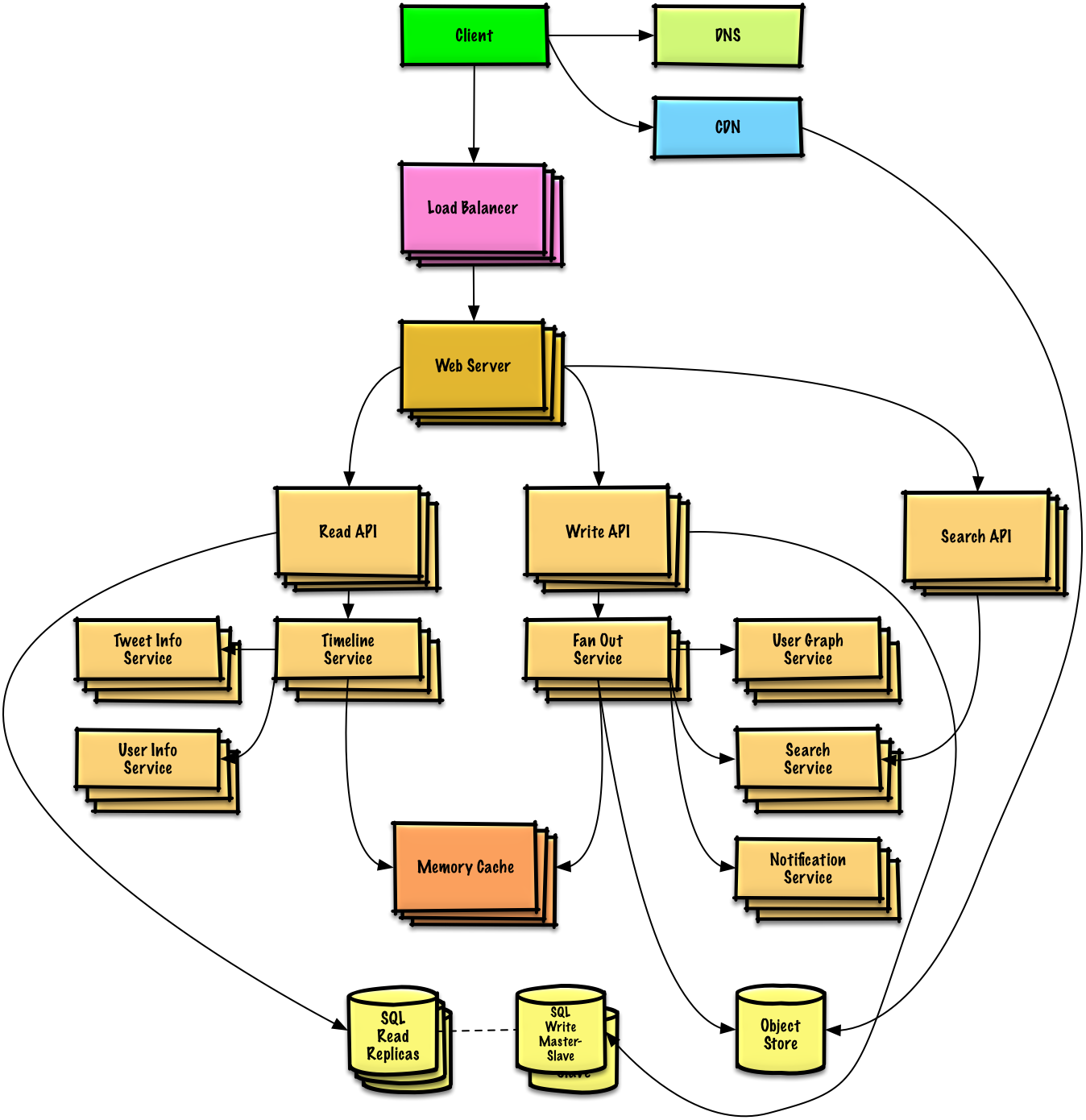
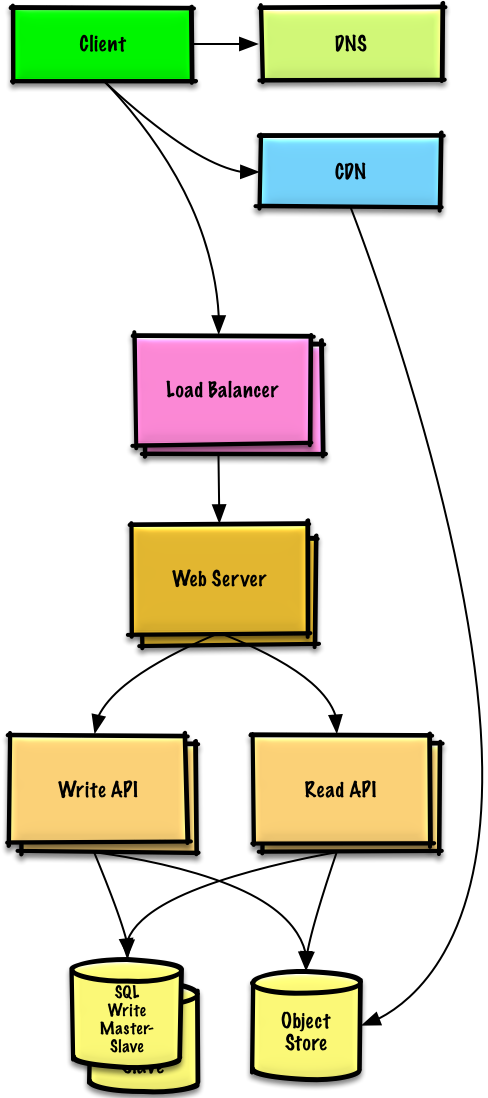
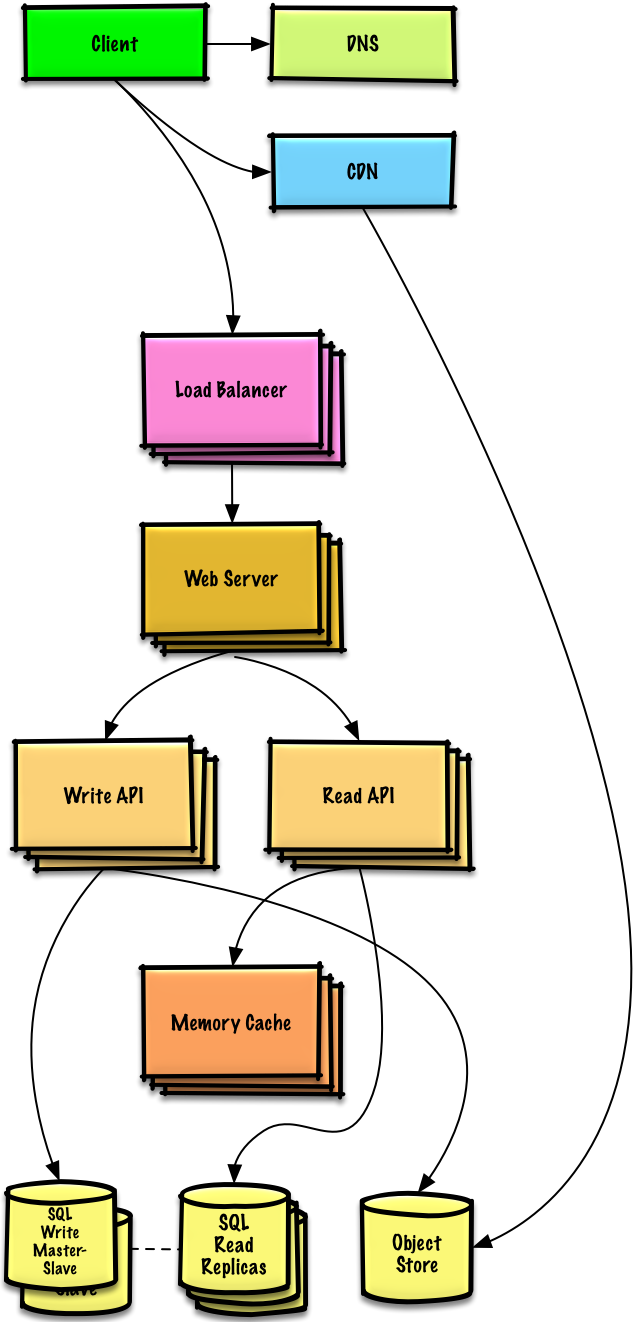
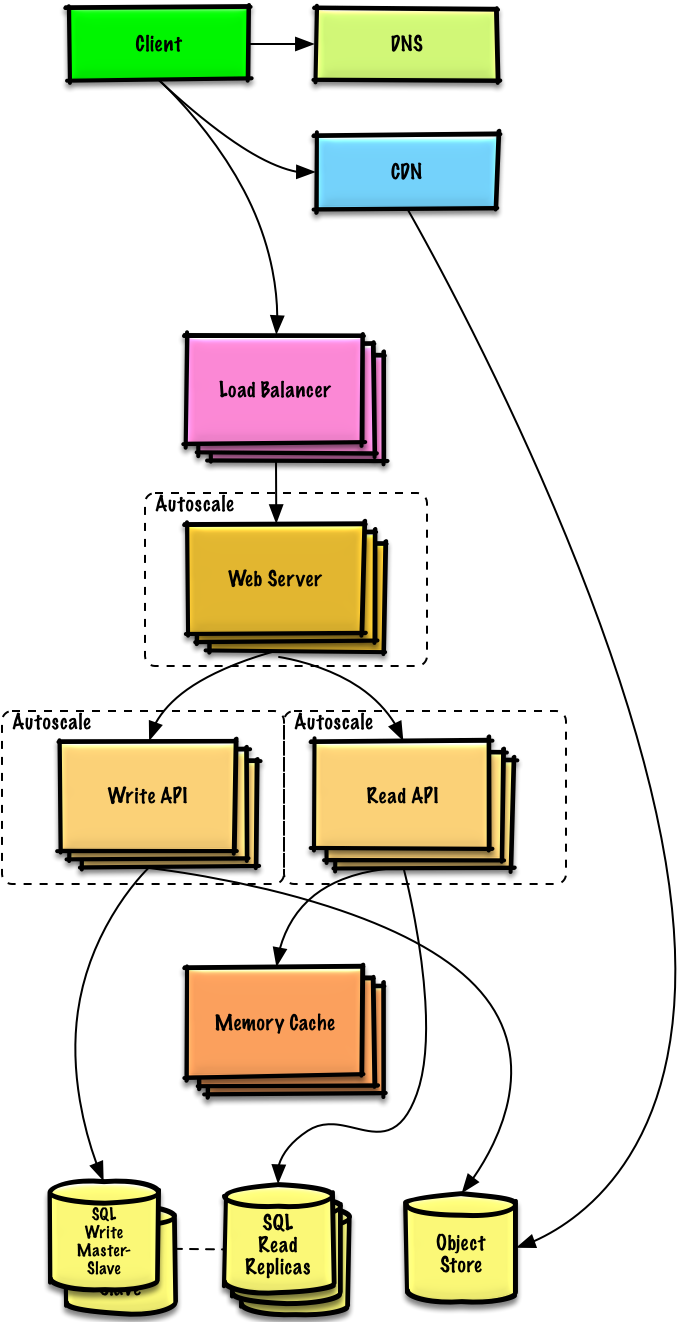
We'll introduce some components to complete the design and to address scalability issues. Internal load balancers are not shown to reduce clutter.
To avoid repeating discussions, refer to the following system design topics for main talking points, tradeoffs, and alternatives:
The Analytics Database could use a data warehousing solution such as Amazon Redshift or Google BigQuery.
An Object Store such as Amazon S3 can comfortably handle the constraint of 12.7 GB of new content per month.
To address the 40 average read requests per second (higher at peak), traffic for popular content should be handled by the Memory Cache instead of the database. The Memory Cache is also useful for handling the unevenly distributed traffic and traffic spikes. The SQL Read Replicas should be able to handle the cache misses, as long as the replicas are not bogged down with replicating writes.
4 average paste writes per second (with higher at peak) should be do-able for a single SQL Write Master-Slave. Otherwise, we'll need to employ additional SQL scaling patterns:
Continue benchmarking and monitoring your system to address bottlenecks as they come up
Scaling is an iterative process
Interview questions
Design the Twitter timeline and search
Note: This document links directly to relevant areas found in the system design topics to avoid duplication. Refer to the linked content for general talking points, tradeoffs, and alternatives.
Design the Facebook feed and Design Facebook search are similar questions.
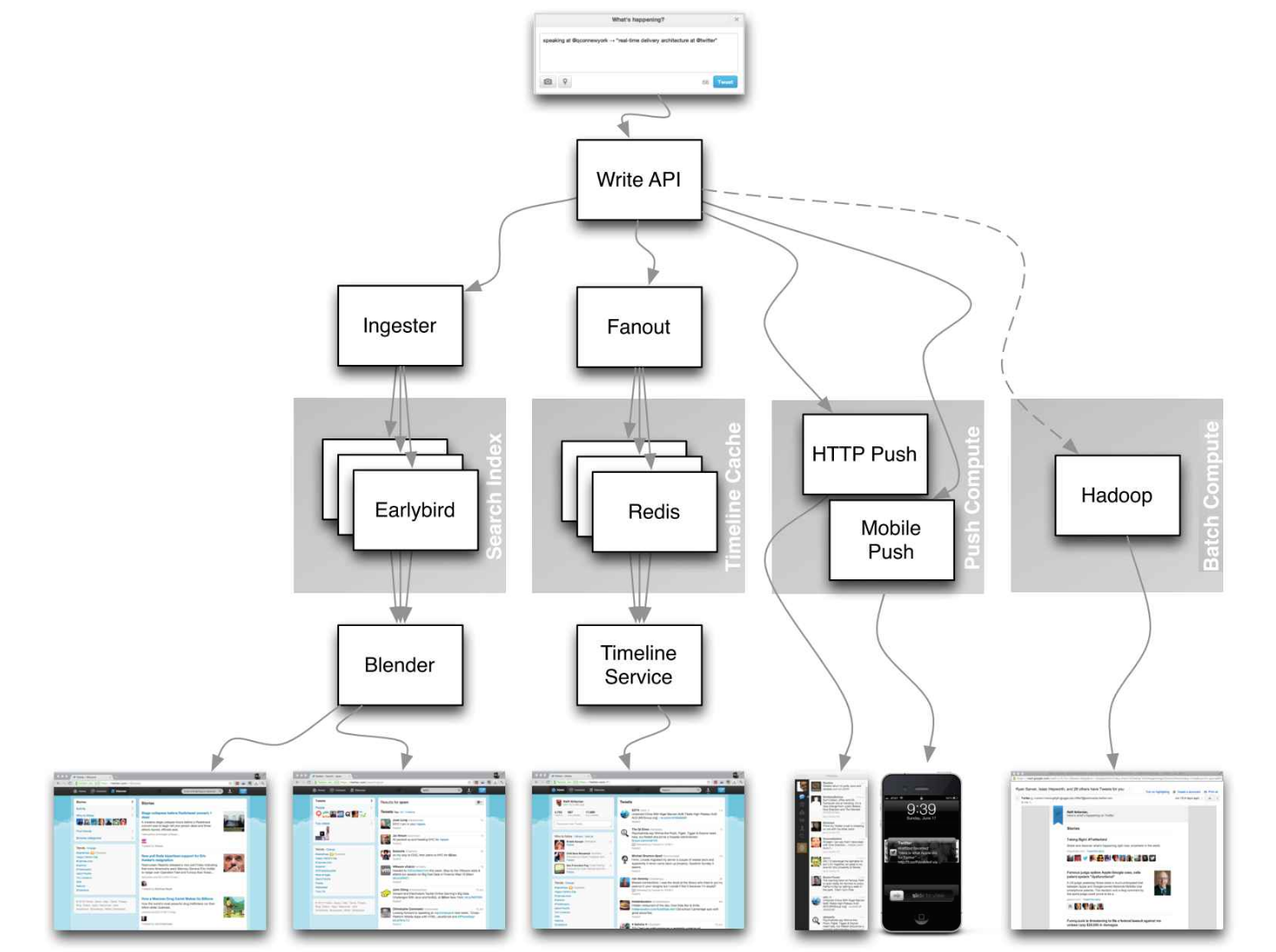
Delivering tweets and building the home timeline (activity from people the user is following) is trickier. Fanning out tweets to all followers (60 thousand tweets delivered on fanout per second) will overload a traditional relational database. We'll probably want to choose a data store with fast writes such as a NoSQL database or Memory Cache. Reading 1 MB sequentially from memory takes about 250 microseconds, while reading from SSD takes 4x and from disk takes 80x longer.1
We could store media such as photos or videos on an Object Store.
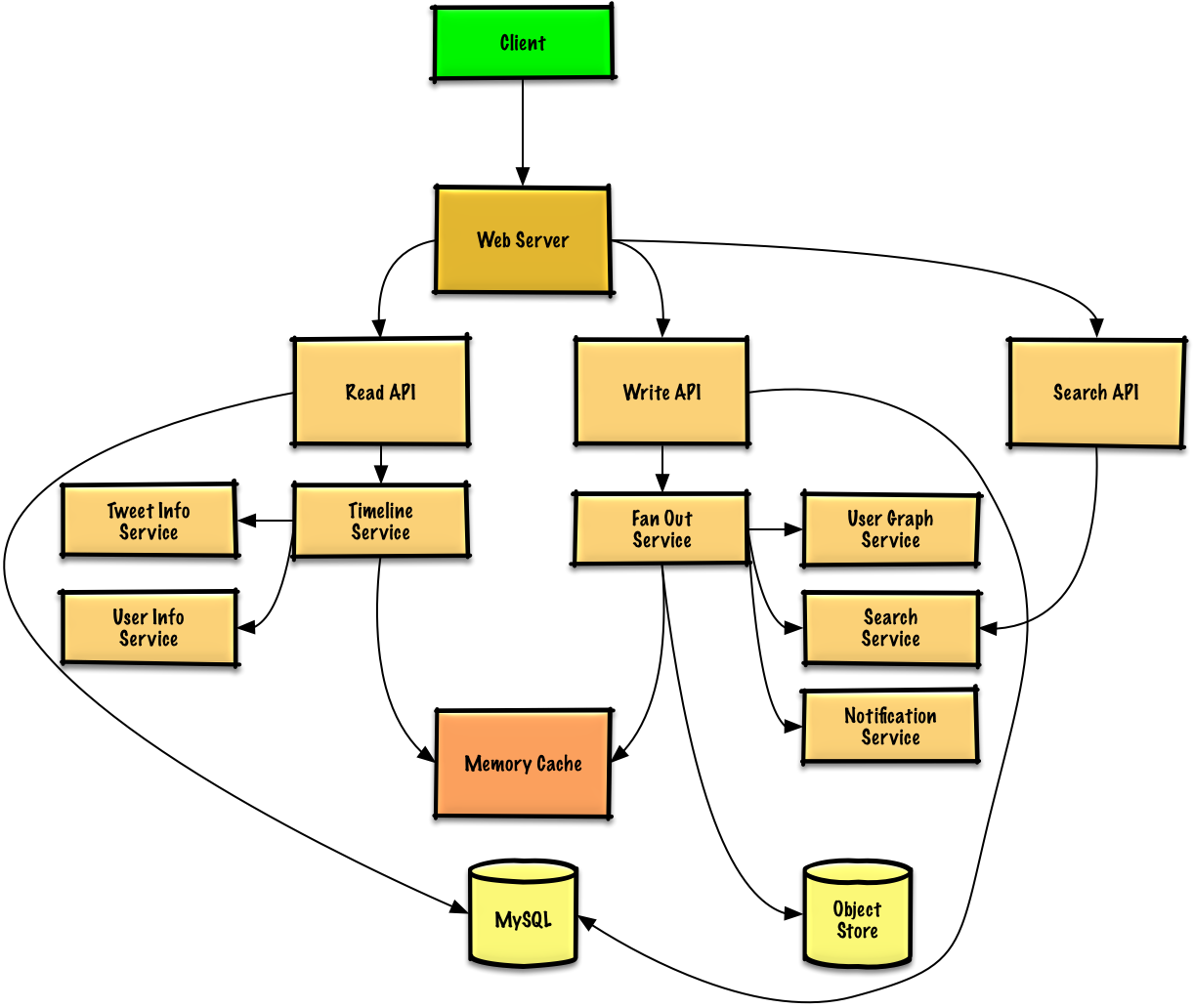
The Client posts a tweet to the Web Server, running as a reverse proxy
The Web Server forwards the request to the Write API server
The Write API stores the tweet in the user's timeline on a SQL database
The Write API contacts the Fan Out Service, which does the following:
Queries the User Graph Service to find the user's followers stored in the Memory Cache
Stores the tweet in the home timeline of the user's followers in a Memory Cache
O(n) operation: 1,000 followers = 1,000 lookups and inserts
Stores the tweet in the Search Index Service to enable fast searching
Stores media in the Object Store
Uses the Notification Service to send out push notifications to followers:
Uses a Queue (not pictured) to asynchronously send out notifications
Clarify with your interviewer how much code you are expected to write.
If our Memory Cache is Redis, we could use a native Redis list with the following structure:
Identify and address bottlenecks, given the constraints.
Important: Do not simply jump right into the final design from the initial design!
State you would 1) Benchmark/Load Test, 2) Profile for bottlenecks 3) address bottlenecks while evaluating alternatives and trade-offs, and 4) repeat. See Design a system that scales to millions of users on AWS as a sample on how to iteratively scale the initial design.
It's important to discuss what bottlenecks you might encounter with the initial design and how you might address each of them. For example, what issues are addressed by adding a Load Balancer with multiple Web Servers? CDN? Master-Slave Replicas? What are the alternatives and Trade-Offs for each?
We'll introduce some components to complete the design and to address scalability issues. Internal load balancers are not shown to reduce clutter.
To avoid repeating discussions, refer to the following system design topics for main talking points, tradeoffs, and alternatives:
The Fanout Service is a potential bottleneck. Twitter users with millions of followers could take several minutes to have their tweets go through the fanout process. This could lead to race conditions with @replies to the tweet, which we could mitigate by re-ordering the tweets at serve time.
We could also avoid fanning out tweets from highly-followed users. Instead, we could search to find tweets for highly-followed users, merge the search results with the user's home timeline results, then re-order the tweets at serve time.
Additional optimizations include:
Keep only several hundred tweets for each home timeline in the Memory Cache
Keep only active users' home timeline info in the Memory Cache
If a user was not previously active in the past 30 days, we could rebuild the timeline from the SQL Database
Query the User Graph Service to determine who the user is following
Get the tweets from the SQL Database and add them to the Memory Cache
Store only a month of tweets in the Tweet Info Service
Store only active users in the User Info Service
The Search Cluster would likely need to keep the tweets in memory to keep latency low
We'll also want to address the bottleneck with the SQL Database.
Although the Memory Cache should reduce the load on the database, it is unlikely the SQL Read Replicas alone would be enough to handle the cache misses. We'll probably need to employ additional SQL scaling patterns.
The high volume of writes would overwhelm a single SQL Write Master-Slave, also pointing to a need for additional scaling techniques.
Continue benchmarking and monitoring your system to address bottlenecks as they come up
Scaling is an iterative process
Interview questions
Design a web crawler
Note: This document links directly to relevant areas found in the system design topics to avoid duplication. Refer to the linked content for general talking points, tradeoffs, and alternatives.
We'll assume we have an initial list of links_to_crawl ranked initially based on overall site popularity. If this is not a reasonable assumption, we can seed the crawler with popular sites that link to outside content such as Yahoo, DMOZ, etc.
We'll use a table crawled_links to store processed links and their page signatures.
We could store links_to_crawl and crawled_links in a key-value NoSQL Database. For the ranked links in links_to_crawl, we could use Redis with sorted sets to maintain a ranking of page links. We should discuss the use cases and tradeoffs between choosing SQL or NoSQL.
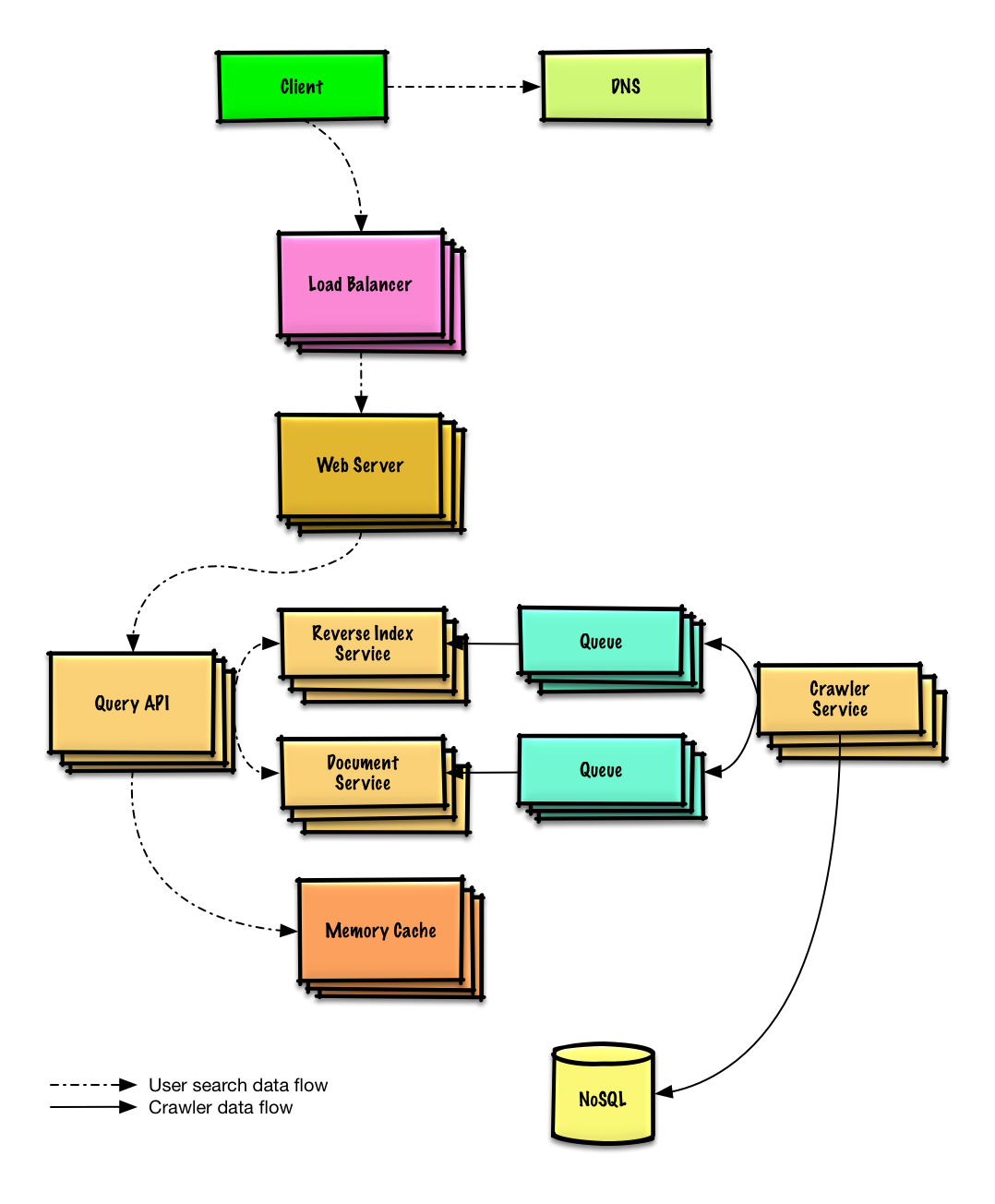
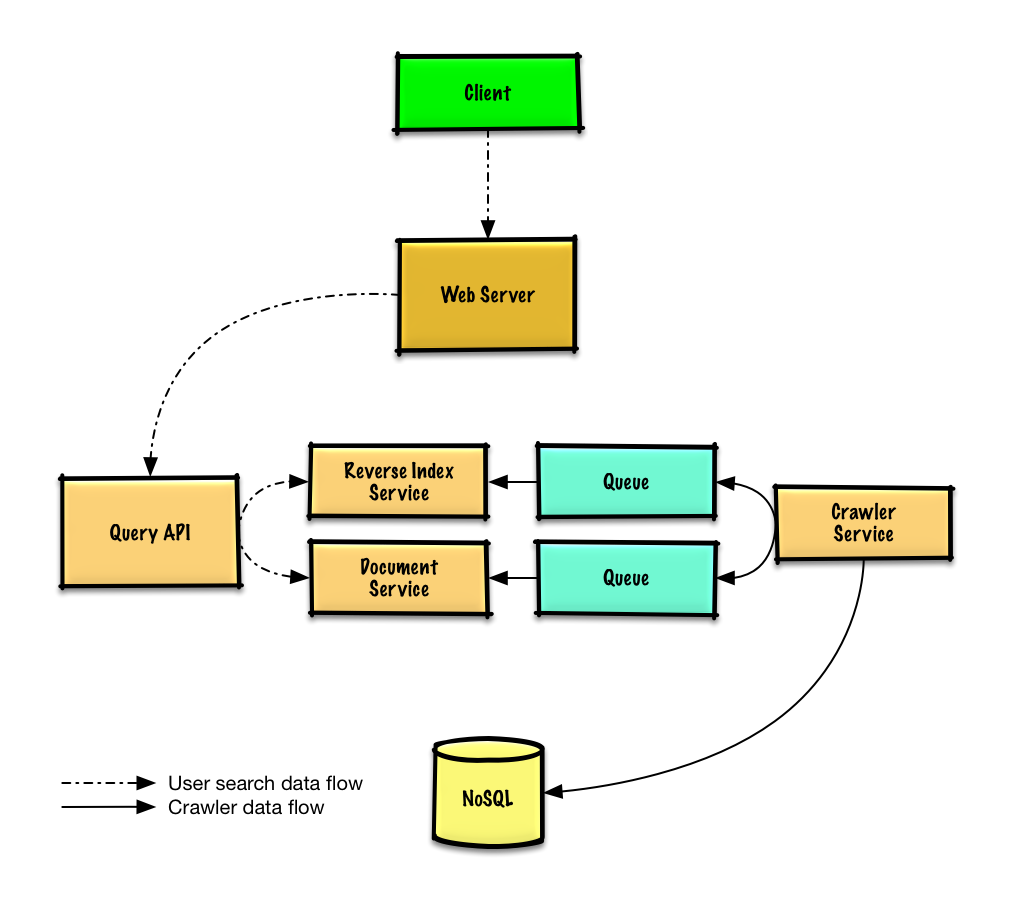
The Crawler Service processes each page link by doing the following in a loop:
Takes the top ranked page link to crawl
Checks crawled_links in the NoSQL Database for an entry with a similar page signature
If we have a similar page, reduces the priority of the page link
This prevents us from getting into a cycle
Continue
Else, crawls the link
Adds a job to the Reverse Index Service queue to generate a reverse index
Adds a job to the Document Service queue to generate a static title and snippet
Generates the page signature
Removes the link from links_to_crawl in the NoSQL Database
Inserts the page link and signature to crawled_links in the NoSQL Database
Clarify with your interviewer how much code you are expected to write.
PagesDataStore is an abstraction within the Crawler Service that uses the NoSQL Database:
classPagesDataStore(object):def__init__(self,db);self.db=db...defadd_link_to_crawl(self,url):"""Add the given link to `links_to_crawl`."""...defremove_link_to_crawl(self,url):"""Remove the given link from `links_to_crawl`."""...defreduce_priority_link_to_crawl(self,url)"""Reduce the priority of a link in `links_to_crawl` to avoid cycles."""...defextract_max_priority_page(self):"""Return the highest priority link in `links_to_crawl`."""...definsert_crawled_link(self,url,signature):"""Add the given link to `crawled_links`."""...defcrawled_similar(self,signature):"""Determine if we've already crawled a page matching the given signature"""...
Page is an abstraction within the Crawler Service that encapsulates a page, its contents, child urls, and signature:
Crawler is the main class within Crawler Service, composed of Page and PagesDataStore.
classCrawler(object):def__init__(self,data_store,reverse_index_queue,doc_index_queue):self.data_store=data_storeself.reverse_index_queue=reverse_index_queueself.doc_index_queue=doc_index_queuedefcreate_signature(self,page):"""Create signature based on url and contents."""...defcrawl_page(self,page):forurlinpage.child_urls:self.data_store.add_link_to_crawl(url)page.signature=self.create_signature(page)self.data_store.remove_link_to_crawl(page.url)self.data_store.insert_crawled_link(page.url,page.signature)defcrawl(self):whileTrue:page=self.data_store.extract_max_priority_page()ifpageisNone:breakifself.data_store.crawled_similar(page.signature):self.data_store.reduce_priority_link_to_crawl(page.url)else:self.crawl_page(page)
Detecting duplicate content is more complex. We could generate a signature based on the contents of the page and compare those two signatures for similarity. Some potential algorithms are Jaccard index and cosine similarity.
Pages need to be crawled regularly to ensure freshness. Crawl results could have a timestamp field that indicates the last time a page was crawled. After a default time period, say one week, all pages should be refreshed. Frequently updated or more popular sites could be refreshed in shorter intervals.
Although we won't dive into details on analytics, we could do some data mining to determine the mean time before a particular page is updated, and use that statistic to determine how often to re-crawl the page.
We might also choose to support a Robots.txt file that gives webmasters control of crawl frequency.
Use case: User inputs a search term and sees a list of relevant pages with titles and snippets#
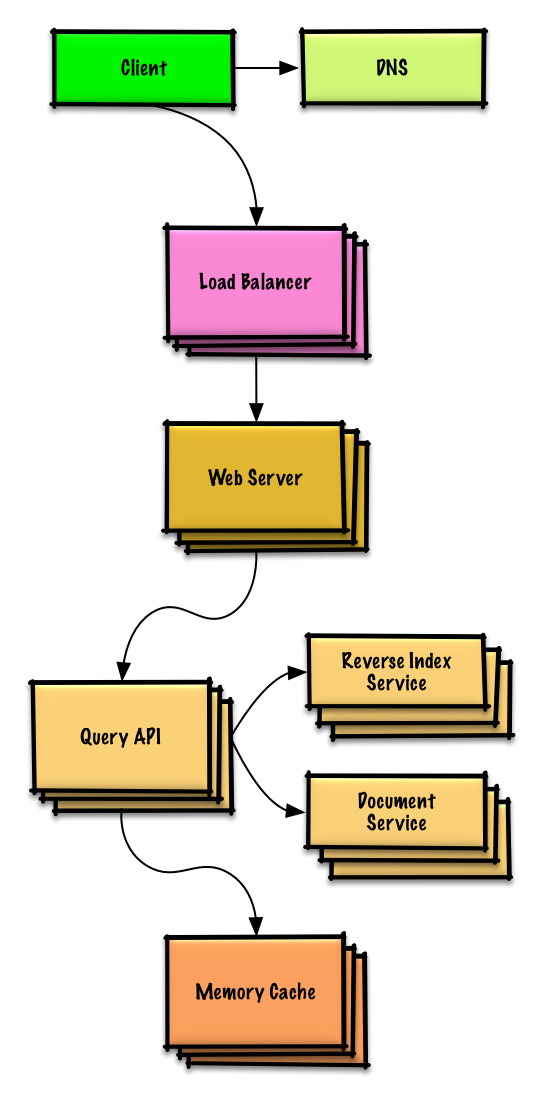
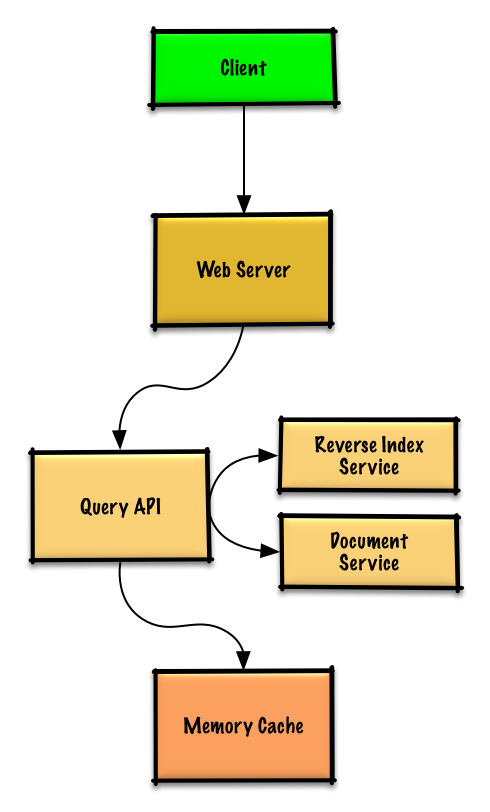
The Client sends a request to the Web Server, running as a reverse proxy
The Web Server forwards the request to the Query API server
The Query API server does the following:
Parses the query
Removes markup
Breaks up the text into terms
Fixes typos
Normalizes capitalization
Converts the query to use boolean operations
Uses the Reverse Index Service to find documents matching the query
The Reverse Index Service ranks the matching results and returns the top ones
Uses the Document Service to return titles and snippets
Identify and address bottlenecks, given the constraints.
Important: Do not simply jump right into the final design from the initial design!
State you would 1) Benchmark/Load Test, 2) Profile for bottlenecks 3) address bottlenecks while evaluating alternatives and trade-offs, and 4) repeat. See Design a system that scales to millions of users on AWS as a sample on how to iteratively scale the initial design.
It's important to discuss what bottlenecks you might encounter with the initial design and how you might address each of them. For example, what issues are addressed by adding a Load Balancer with multiple Web Servers? CDN? Master-Slave Replicas? What are the alternatives and Trade-Offs for each?
We'll introduce some components to complete the design and to address scalability issues. Internal load balancers are not shown to reduce clutter.
To avoid repeating discussions, refer to the following system design topics for main talking points, tradeoffs, and alternatives:
Some searches are very popular, while others are only executed once. Popular queries can be served from a Memory Cache such as Redis or Memcached to reduce response times and to avoid overloading the Reverse Index Service and Document Service. The Memory Cache is also useful for handling the unevenly distributed traffic and traffic spikes. Reading 1 MB sequentially from memory takes about 250 microseconds, while reading from SSD takes 4x and from disk takes 80x longer.1
Below are a few other optimizations to the Crawling Service:
To handle the data size and request load, the Reverse Index Service and Document Service will likely need to make heavy use sharding and federation.
DNS lookup can be a bottleneck, the Crawler Service can keep its own DNS lookup that is refreshed periodically
The Crawler Service can improve performance and reduce memory usage by keeping many open connections at a time, referred to as connection pooling
Continue benchmarking and monitoring your system to address bottlenecks as they come up
Scaling is an iterative process
Interview questions
Design Mint.com
Note: This document links directly to relevant areas found in the system design topics to avoid duplication. Refer to the linked content for general talking points, tradeoffs, and alternatives.
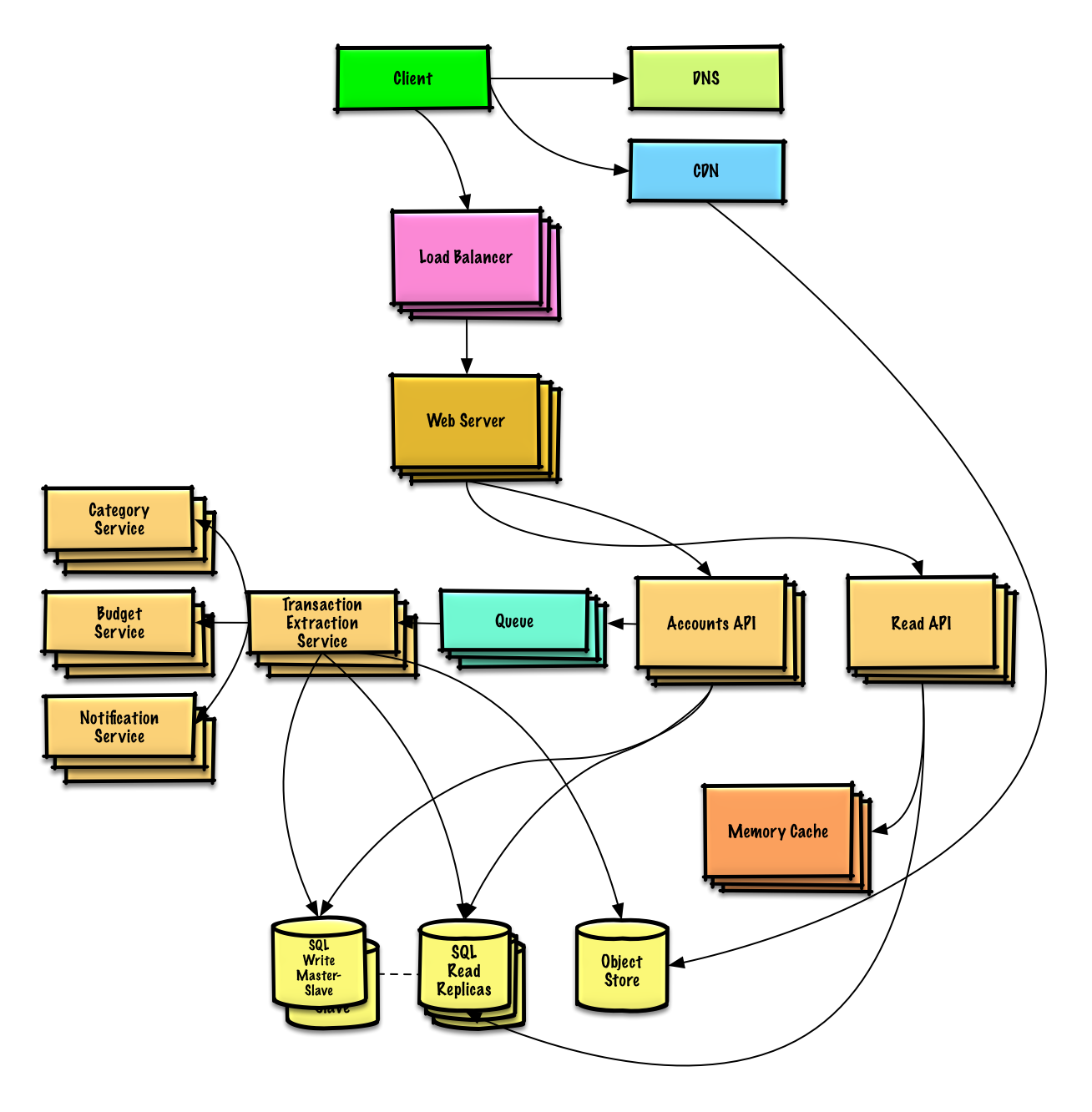
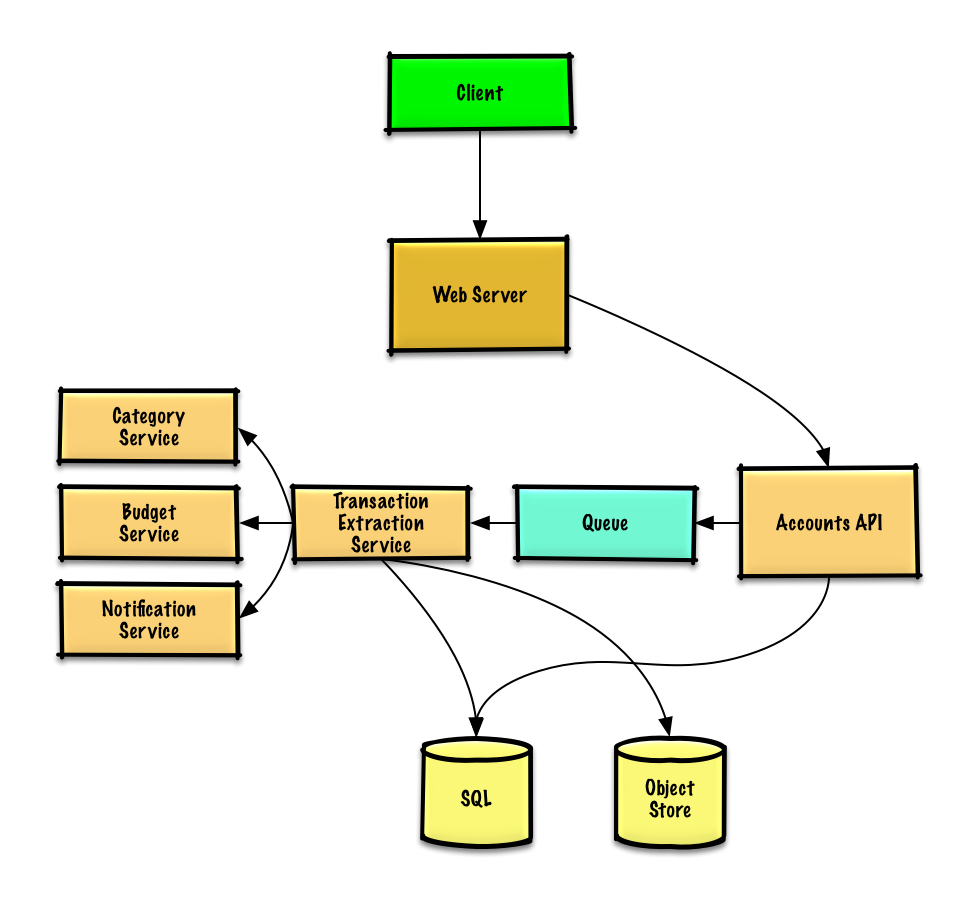
The Client sends a request to the Web Server, running as a reverse proxy
The Web Server forwards the request to the Accounts API server
The Accounts API server updates the SQL Databaseaccounts table with the newly entered account info
Clarify with your interviewer how much code you are expected to write.
The accounts table could have the following structure:
id int NOT NULL AUTO_INCREMENT
created_at datetime NOT NULL
last_update datetime NOT NULL
account_url varchar(255) NOT NULL
account_login varchar(32) NOT NULL
account_password_hash char(64) NOT NULL
user_id int NOT NULL
PRIMARY KEY(id)
FOREIGN KEY(user_id) REFERENCES users(id)
We'll create an index on id, user_id, and created_at to speed up lookups (log-time instead of scanning the entire table) and to keep the data in memory. Reading 1 MB sequentially from memory takes about 250 microseconds, while reading from SSD takes 4x and from disk takes 80x longer.1
Next, the service extracts transactions from the account.
Use case: Service extracts transactions from the account#
We'll want to extract information from an account in these cases:
The user first links the account
The user manually refreshes the account
Automatically each day for users who have been active in the past 30 days
Data flow:
The Client sends a request to the Web Server
The Web Server forwards the request to the Accounts API server
The Accounts API server places a job on a Queue such as Amazon SQS or RabbitMQ
Extracting transactions could take awhile, we'd probably want to do this asynchronously with a queue, although this introduces additional complexity
The Transaction Extraction Service does the following:
Pulls from the Queue and extracts transactions for the given account from the financial institution, storing the results as raw log files in the Object Store
Uses the Category Service to categorize each transaction
Uses the Budget Service to calculate aggregate monthly spending by category
The Budget Service uses the Notification Service to let users know if they are nearing or have exceeded their budget
Updates the SQL Databasetransactions table with categorized transactions
Updates the SQL Databasemonthly_spending table with aggregate monthly spending by category
Notifies the user the transactions have completed through the Notification Service:
Uses a Queue (not pictured) to asynchronously send out notifications
The transactions table could have the following structure:
id int NOT NULL AUTO_INCREMENT
created_at datetime NOT NULL
seller varchar(32) NOT NULL
amount decimal NOT NULL
user_id int NOT NULL
PRIMARY KEY(id)
FOREIGN KEY(user_id) REFERENCES users(id)
We'll create an index on id, user_id, and created_at.
The monthly_spending table could have the following structure:
id int NOT NULL AUTO_INCREMENT
month_year date NOT NULL
category varchar(32)
amount decimal NOT NULL
user_id int NOT NULL
PRIMARY KEY(id)
FOREIGN KEY(user_id) REFERENCES users(id)
For the Category Service, we can seed a seller-to-category dictionary with the most popular sellers. If we estimate 50,000 sellers and estimate each entry to take less than 255 bytes, the dictionary would only take about 12 MB of memory.
Clarify with your interviewer how much code you are expected to write.
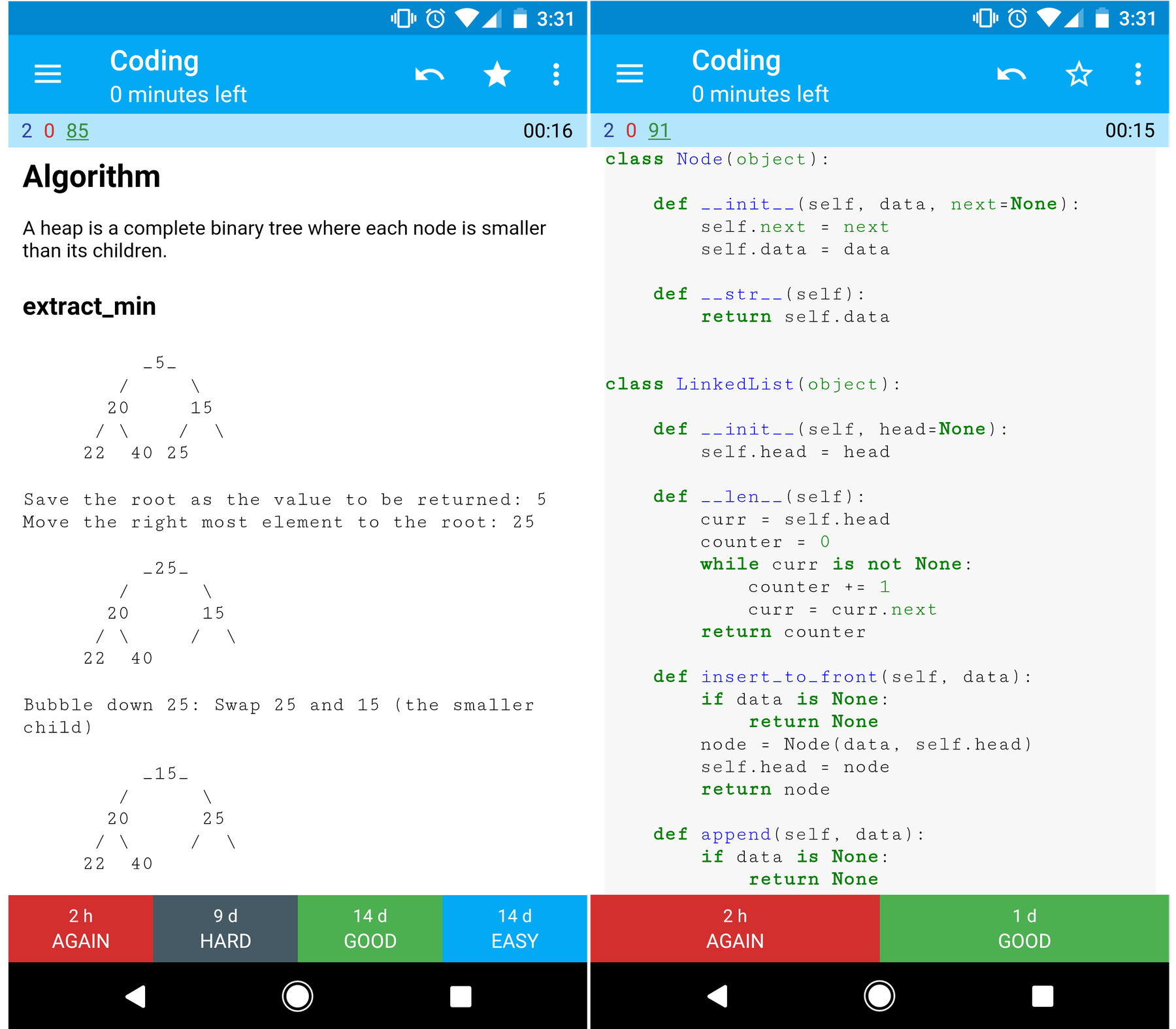
For sellers not initially seeded in the map, we could use a crowdsourcing effort by evaluating the manual category overrides our users provide. We could use a heap to quickly lookup the top manual override per seller in O(1) time.
To start, we could use a generic budget template that allocates category amounts based on income tiers. Using this approach, we would not have to store the 100 million budget items identified in the constraints, only those that the user overrides. If a user overrides a budget category, which we could store the override in the TABLE budget_overrides.
For the Budget Service, we can potentially run SQL queries on the transactions table to generate the monthly_spending aggregate table. The monthly_spending table would likely have much fewer rows than the total 5 billion transactions, since users typically have many transactions per month.
As an alternative, we can run MapReduce jobs on the raw transaction files to:
Categorize each transaction
Generate aggregate monthly spending by category
Running analyses on the transaction files could significantly reduce the load on the database.
We could call the Budget Service to re-run the analysis if the user updates a category.
Clarify with your interviewer how much code you are expected to write.
Sample log file format, tab delimited:
user_id timestamp seller amount
MapReduce implementation:
classSpendingByCategory(MRJob):def__init__(self,categorizer):self.categorizer=categorizerself.current_year_month=calc_current_year_month()...defcalc_current_year_month(self):"""Return the current year and month."""...defextract_year_month(self,timestamp):"""Return the year and month portions of the timestamp."""...defhandle_budget_notifications(self,key,total):"""Call notification API if nearing or exceeded budget."""...defmapper(self,_,line):"""Parse each log line, extract and transform relevant lines. Argument line will be of the form: user_id timestamp seller amount Using the categorizer to convert seller to category, emit key value pairs of the form: (user_id, 2016-01, shopping), 25 (user_id, 2016-01, shopping), 100 (user_id, 2016-01, gas), 50 """user_id,timestamp,seller,amount=line.split('\t')category=self.categorizer.categorize(seller)period=self.extract_year_month(timestamp)ifperiod==self.current_year_month:yield(user_id,period,category),amountdefreducer(self,key,value):"""Sum values for each key. (user_id, 2016-01, shopping), 125 (user_id, 2016-01, gas), 50 """total=sum(values)yieldkey,sum(values)
Identify and address bottlenecks, given the constraints.
Important: Do not simply jump right into the final design from the initial design!
State you would 1) Benchmark/Load Test, 2) Profile for bottlenecks 3) address bottlenecks while evaluating alternatives and trade-offs, and 4) repeat. See Design a system that scales to millions of users on AWS as a sample on how to iteratively scale the initial design.
It's important to discuss what bottlenecks you might encounter with the initial design and how you might address each of them. For example, what issues are addressed by adding a Load Balancer with multiple Web Servers? CDN? Master-Slave Replicas? What are the alternatives and Trade-Offs for each?
We'll introduce some components to complete the design and to address scalability issues. Internal load balancers are not shown to reduce clutter.
To avoid repeating discussions, refer to the following system design topics for main talking points, tradeoffs, and alternatives:
Instead of keeping the monthly_spending aggregate table in the SQL Database, we could create a separate Analytics Database using a data warehousing solution such as Amazon Redshift or Google BigQuery.
We might only want to store a month of transactions data in the database, while storing the rest in a data warehouse or in an Object Store. An Object Store such as Amazon S3 can comfortably handle the constraint of 250 GB of new content per month.
To address the 200 average read requests per second (higher at peak), traffic for popular content should be handled by the Memory Cache instead of the database. The Memory Cache is also useful for handling the unevenly distributed traffic and traffic spikes. The SQL Read Replicas should be able to handle the cache misses, as long as the replicas are not bogged down with replicating writes.
2,000 average transaction writes per second (higher at peak) might be tough for a single SQL Write Master-Slave. We might need to employ additional SQL scaling patterns:
Continue benchmarking and monitoring your system to address bottlenecks as they come up
Scaling is an iterative process
Interview questions
Design the data structures for a social network
Note: This document links directly to relevant areas found in the system design topics to avoid duplication. Refer to the linked content for general talking points, tradeoffs, and alternatives.
Use case: User searches for someone and sees the shortest path to the searched person#
Clarify with your interviewer how much code you are expected to write.
Without the constraint of millions of users (vertices) and billions of friend relationships (edges), we could solve this unweighted shortest path task with a general BFS approach:
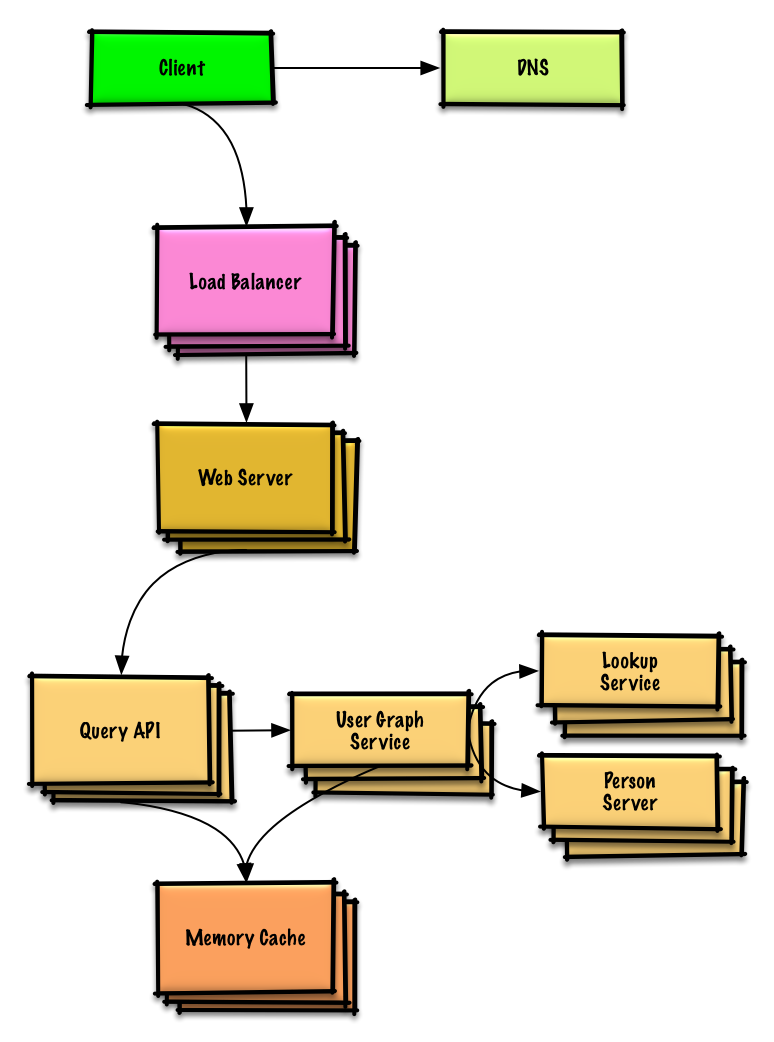
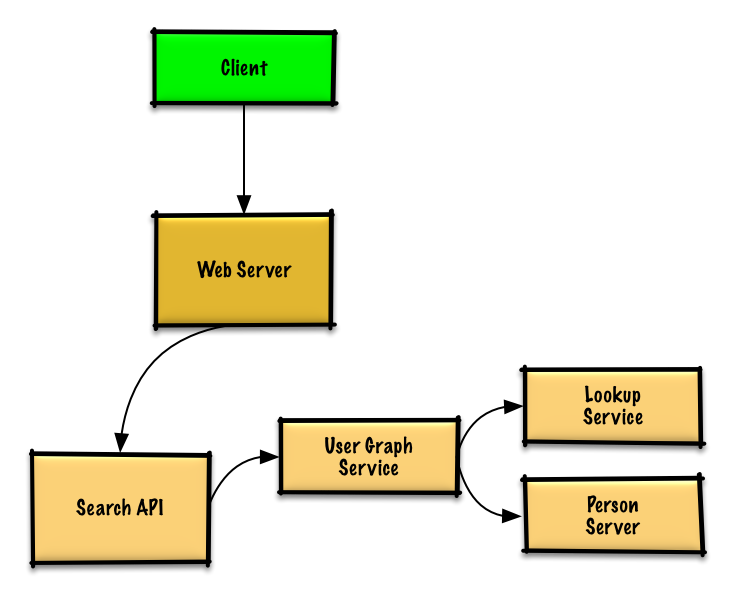
We won't be able to fit all users on the same machine, we'll need to shard users across Person Servers and access them with a Lookup Service.
The Client sends a request to the Web Server, running as a reverse proxy
The Web Server forwards the request to the Search API server
The Search API server forwards the request to the User Graph Service
The User Graph Service does the following:
Uses the Lookup Service to find the Person Server where the current user's info is stored
Finds the appropriate Person Server to retrieve the current user's list of friend_ids
Runs a BFS search using the current user as the source and the current user's friend_ids as the ids for each adjacent_node
To get the adjacent_node from a given id:
The User Graph Service will again need to communicate with the Lookup Service to determine which Person Server stores theadjacent_node matching the given id (potential for optimization)
Clarify with your interviewer how much code you should be writing.
Note: Error handling is excluded below for simplicity. Ask if you should code proper error handing.
classUserGraphService(object):def__init__(self,lookup_service):self.lookup_service=lookup_servicedefperson(self,person_id):person_server=self.lookup_service.lookup_person_server(person_id)returnperson_server.people([person_id])defshortest_path(self,source_key,dest_key):ifsource_keyisNoneordest_keyisNone:returnNoneifsource_keyisdest_key:return[source_key]prev_node_keys=self._shortest_path(source_key,dest_key)ifprev_node_keysisNone:returnNoneelse:# Iterate through the path_ids backwards, starting at dest_keypath_ids=[dest_key]prev_node_key=prev_node_keys[dest_key]whileprev_node_keyisnotNone:path_ids.append(prev_node_key)prev_node_key=prev_node_keys[prev_node_key]# Reverse the list since we iterated backwardsreturnpath_ids[::-1]def_shortest_path(self,source_key,dest_key,path):# Use the id to get the Personsource=self.person(source_key)# Update our bfs queuequeue=deque()queue.append(source)# prev_node_keys keeps track of each hop from# the source_key to the dest_keyprev_node_keys={source_key:None}# We'll use visited_ids to keep track of which nodes we've# visited, which can be different from a typical bfs where# this can be stored in the node itselfvisited_ids=set()visited_ids.add(source.id)whilequeue:node=queue.popleft()ifnode.keyisdest_key:returnprev_node_keysprev_node=nodeforfriend_idinnode.friend_ids:iffriend_idnotinvisited_ids:friend_node=self.person(friend_id)queue.append(friend_node)prev_node_keys[friend_id]=prev_node.keyvisited_ids.add(friend_id)returnNone
Identify and address bottlenecks, given the constraints.
Important: Do not simply jump right into the final design from the initial design!
State you would 1) Benchmark/Load Test, 2) Profile for bottlenecks 3) address bottlenecks while evaluating alternatives and trade-offs, and 4) repeat. See Design a system that scales to millions of users on AWS as a sample on how to iteratively scale the initial design.
It's important to discuss what bottlenecks you might encounter with the initial design and how you might address each of them. For example, what issues are addressed by adding a Load Balancer with multiple Web Servers? CDN? Master-Slave Replicas? What are the alternatives and Trade-Offs for each?
We'll introduce some components to complete the design and to address scalability issues. Internal load balancers are not shown to reduce clutter.
To avoid repeating discussions, refer to the following system design topics for main talking points, tradeoffs, and alternatives:
To address the constraint of 400 average read requests per second (higher at peak), person data can be served from a Memory Cache such as Redis or Memcached to reduce response times and to reduce traffic to downstream services. This could be especially useful for people who do multiple searches in succession and for people who are well-connected. Reading 1 MB sequentially from memory takes about 250 microseconds, while reading from SSD takes 4x and from disk takes 80x longer.1
Below are further optimizations:
Store complete or partial BFS traversals to speed up subsequent lookups in the Memory Cache
Batch compute offline then store complete or partial BFS traversals to speed up subsequent lookups in a NoSQL Database
Reduce machine jumps by batching together friend lookups hosted on the same Person Server
ShardPerson Servers by location to further improve this, as friends generally live closer to each other
Do two BFS searches at the same time, one starting from the source, and one from the destination, then merge the two paths
Start the BFS search from people with large numbers of friends, as they are more likely to reduce the number of degrees of separation between the current user and the search target
Set a limit based on time or number of hops before asking the user if they want to continue searching, as searching could take a considerable amount of time in some cases
Use a Graph Database such as Neo4j or a graph-specific query language such as GraphQL (if there were no constraint preventing the use of Graph Databases)
Continue benchmarking and monitoring your system to address bottlenecks as they come up
Scaling is an iterative process
Interview questions
Design a key-value cache to save the results of the most recent web server queries
Note: This document links directly to relevant areas found in the system design topics to avoid duplication. Refer to the linked content for general talking points, tradeoffs, and alternatives.
Use case: User sends a request resulting in a cache hit#
Popular queries can be served from a Memory Cache such as Redis or Memcached to reduce read latency and to avoid overloading the Reverse Index Service and Document Service. Reading 1 MB sequentially from memory takes about 250 microseconds, while reading from SSD takes 4x and from disk takes 80x longer.1
Since the cache has limited capacity, we'll use a least recently used (LRU) approach to expire older entries.
The Client sends a request to the Web Server, running as a reverse proxy
The Web Server forwards the request to the Query API server
The Query API server does the following:
Parses the query
Removes markup
Breaks up the text into terms
Fixes typos
Normalizes capitalization
Converts the query to use boolean operations
Checks the Memory Cache for the content matching the query
If there's a hit in the Memory Cache, the Memory Cache does the following:
Updates the cached entry's position to the front of the LRU list
Returns the cached contents
Else, the Query API does the following:
Uses the Reverse Index Service to find documents matching the query
The Reverse Index Service ranks the matching results and returns the top ones
Uses the Document Service to return titles and snippets
Updates the Memory Cache with the contents, placing the entry at the front of the LRU list
The cache can use a doubly-linked list: new items will be added to the head while items to expire will be removed from the tail. We'll use a hash table for fast lookups to each linked list node.
Clarify with your interviewer how much code you are expected to write.
Query API Server implementation:
classQueryApi(object):def__init__(self,memory_cache,reverse_index_service):self.memory_cache=memory_cacheself.reverse_index_service=reverse_index_servicedefparse_query(self,query):"""Remove markup, break text into terms, deal with typos, normalize capitalization, convert to use boolean operations. """...defprocess_query(self,query):query=self.parse_query(query)results=self.memory_cache.get(query)ifresultsisNone:results=self.reverse_index_service.process_search(query)self.memory_cache.set(query,results)returnresults
classCache(object):def__init__(self,MAX_SIZE):self.MAX_SIZE=MAX_SIZEself.size=0self.lookup={}# key: query, value: nodeself.linked_list=LinkedList()defget(self,query)"""Get the stored query result from the cache. Accessing a node updates its position to the front of the LRU list. """node=self.lookup[query]ifnodeisNone:returnNoneself.linked_list.move_to_front(node)returnnode.resultsdefset(self,results,query):"""Set the result for the given query key in the cache. When updating an entry, updates its position to the front of the LRU list. If the entry is new and the cache is at capacity, removes the oldest entry before the new entry is added. """node=self.lookup[query]ifnodeisnotNone:# Key exists in cache, update the valuenode.results=resultsself.linked_list.move_to_front(node)else:# Key does not exist in cacheifself.size==self.MAX_SIZE:# Remove the oldest entry from the linked list and lookupself.lookup.pop(self.linked_list.tail.query,None)self.linked_list.remove_from_tail()else:self.size+=1# Add the new key and valuenew_node=Node(query,results)self.linked_list.append_to_front(new_node)self.lookup[query]=new_node
The most straightforward way to handle these cases is to simply set a max time that a cached entry can stay in the cache before it is updated, usually referred to as time to live (TTL).
Identify and address bottlenecks, given the constraints.
Important: Do not simply jump right into the final design from the initial design!
State you would 1) Benchmark/Load Test, 2) Profile for bottlenecks 3) address bottlenecks while evaluating alternatives and trade-offs, and 4) repeat. See Design a system that scales to millions of users on AWS as a sample on how to iteratively scale the initial design.
It's important to discuss what bottlenecks you might encounter with the initial design and how you might address each of them. For example, what issues are addressed by adding a Load Balancer with multiple Web Servers? CDN? Master-Slave Replicas? What are the alternatives and Trade-Offs for each?
We'll introduce some components to complete the design and to address scalability issues. Internal load balancers are not shown to reduce clutter.
To avoid repeating discussions, refer to the following system design topics for main talking points, tradeoffs, and alternatives:
To handle the heavy request load and the large amount of memory needed, we'll scale horizontally. We have three main options on how to store the data on our Memory Cache cluster:
Each machine in the cache cluster has its own cache - Simple, although it will likely result in a low cache hit rate.
Each machine in the cache cluster has a copy of the cache - Simple, although it is an inefficient use of memory.
The cache is sharded across all machines in the cache cluster - More complex, although it is likely the best option. We could use hashing to determine which machine could have the cached results of a query using machine = hash(query). We'll likely want to use consistent hashing.
Continue benchmarking and monitoring your system to address bottlenecks as they come up
Scaling is an iterative process
Interview questions
Design Amazon's sales rank by category feature
Note: This document links directly to relevant areas found in the system design topics to avoid duplication. Refer to the linked content for general talking points, tradeoffs, and alternatives.
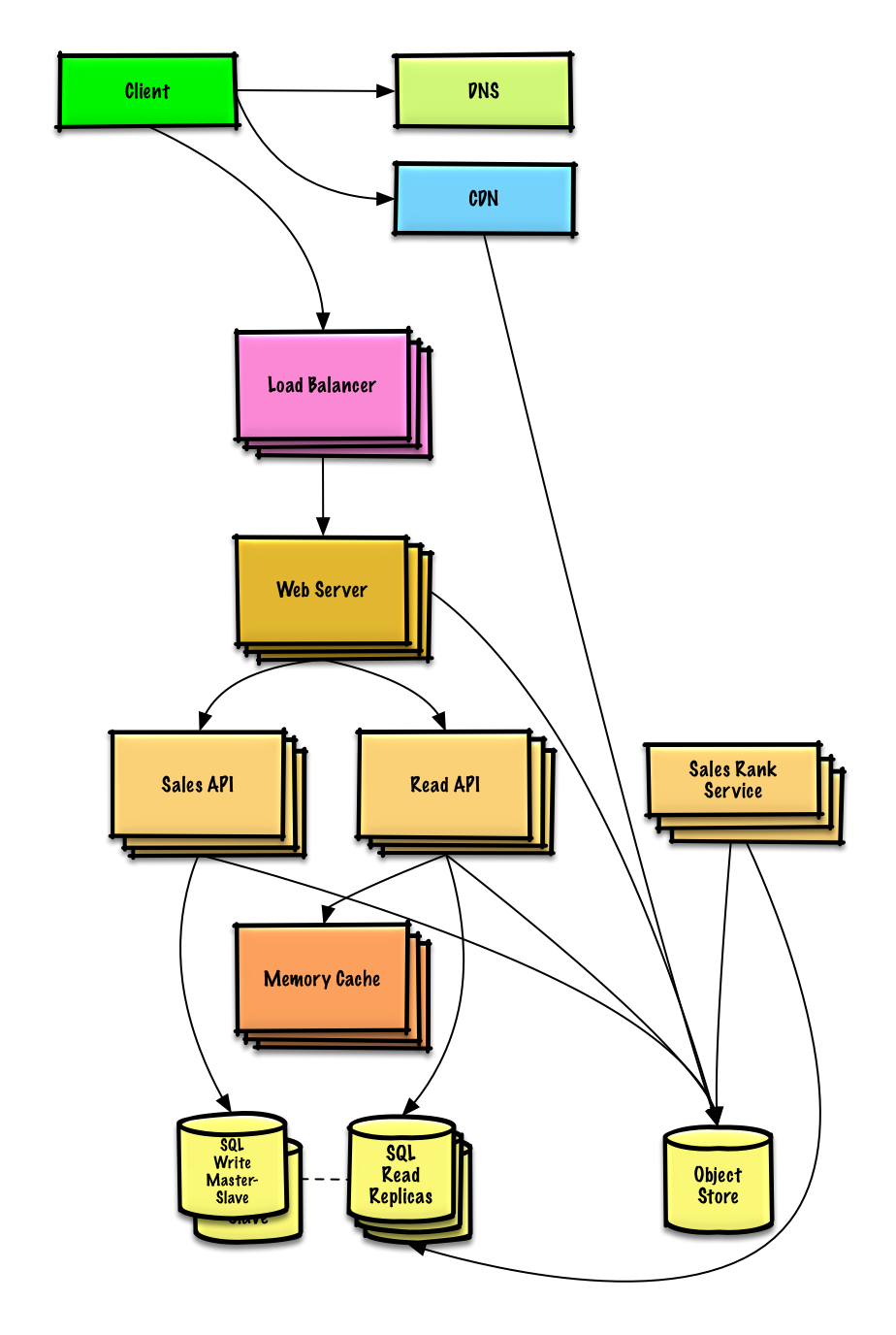
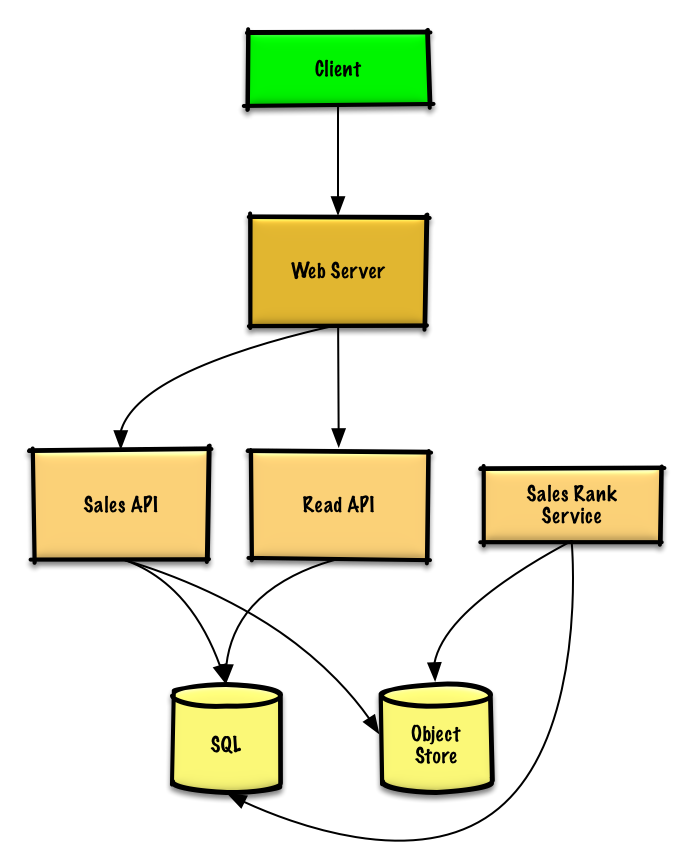
The Sales Rank Service could use MapReduce, using the Sales API server log files as input and writing the results to an aggregate table sales_rank in a SQL Database. We should discuss the use cases and tradeoffs between choosing SQL or NoSQL.
We'll use a multi-step MapReduce:
Step 1 - Transform the data to (category, product_id), sum(quantity)
Step 2 - Perform a distributed sort
classSalesRanker(MRJob):defwithin_past_week(self,timestamp):"""Return True if timestamp is within past week, False otherwise."""...defmapper(self,_line):"""Parse each log line, extract and transform relevant lines. Emit key value pairs of the form: (category1, product1), 2 (category2, product1), 2 (category2, product1), 1 (category1, product2), 3 (category2, product3), 7 (category1, product4), 1 """timestamp,product_id,category_id,quantity,total_price,seller_id, \
buyer_id=line.split('\t')ifself.within_past_week(timestamp):yield(category_id,product_id),quantitydefreducer(self,key,value):"""Sum values for each key. (category1, product1), 2 (category2, product1), 3 (category1, product2), 3 (category2, product3), 7 (category1, product4), 1 """yieldkey,sum(values)defmapper_sort(self,key,value):"""Construct key to ensure proper sorting. Transform key and value to the form: (category1, 2), product1 (category2, 3), product1 (category1, 3), product2 (category2, 7), product3 (category1, 1), product4 The shuffle/sort step of MapReduce will then do a distributed sort on the keys, resulting in: (category1, 1), product4 (category1, 2), product1 (category1, 3), product2 (category2, 3), product1 (category2, 7), product3 """category_id,product_id=keyquantity=valueyield(category_id,quantity),product_iddefreducer_identity(self,key,value):yieldkey,valuedefsteps(self):"""Run the map and reduce steps."""return[self.mr(mapper=self.mapper,reducer=self.reducer),self.mr(mapper=self.mapper_sort,reducer=self.reducer_identity),]
The result would be the following sorted list, which we could insert into the sales_rank table:
The sales_rank table could have the following structure:
id int NOT NULL AUTO_INCREMENT
category_id int NOT NULL
total_sold int NOT NULL
product_id int NOT NULL
PRIMARY KEY(id)
FOREIGN KEY(category_id) REFERENCES Categories(id)
FOREIGN KEY(product_id) REFERENCES Products(id)
We'll create an index on id, category_id, and product_id to speed up lookups (log-time instead of scanning the entire table) and to keep the data in memory. Reading 1 MB sequentially from memory takes about 250 microseconds, while reading from SSD takes 4x and from disk takes 80x longer.1
Use case: User views the past week's most popular products by category#
The Client sends a request to the Web Server, running as a reverse proxy
The Web Server forwards the request to the Read API server
The Read API server reads from the SQL Databasesales_rank table
Identify and address bottlenecks, given the constraints.
Important: Do not simply jump right into the final design from the initial design!
State you would 1) Benchmark/Load Test, 2) Profile for bottlenecks 3) address bottlenecks while evaluating alternatives and trade-offs, and 4) repeat. See Design a system that scales to millions of users on AWS as a sample on how to iteratively scale the initial design.
It's important to discuss what bottlenecks you might encounter with the initial design and how you might address each of them. For example, what issues are addressed by adding a Load Balancer with multiple Web Servers? CDN? Master-Slave Replicas? What are the alternatives and Trade-Offs for each?
We'll introduce some components to complete the design and to address scalability issues. Internal load balancers are not shown to reduce clutter.
To avoid repeating discussions, refer to the following system design topics for main talking points, tradeoffs, and alternatives:
The Analytics Database could use a data warehousing solution such as Amazon Redshift or Google BigQuery.
We might only want to store a limited time period of data in the database, while storing the rest in a data warehouse or in an Object Store. An Object Store such as Amazon S3 can comfortably handle the constraint of 40 GB of new content per month.
To address the 40,000 average read requests per second (higher at peak), traffic for popular content (and their sales rank) should be handled by the Memory Cache instead of the database. The Memory Cache is also useful for handling the unevenly distributed traffic and traffic spikes. With the large volume of reads, the SQL Read Replicas might not be able to handle the cache misses. We'll probably need to employ additional SQL scaling patterns.
400 average writes per second (higher at peak) might be tough for a single SQL Write Master-Slave, also pointing to a need for additional scaling techniques.
Continue benchmarking and monitoring your system to address bottlenecks as they come up
Scaling is an iterative process
Interview questions
Design a system that scales to millions of users on AWS
Note: This document links directly to relevant areas found in the system design topics to avoid duplication. Refer to the linked content for general talking points, tradeoffs, and alternatives.
Solving this problem takes an iterative approach of: 1) Benchmark/Load Test, 2) Profile for bottlenecks 3) address bottlenecks while evaluating alternatives and trade-offs, and 4) repeat, which is good pattern for evolving basic designs to scalable designs.
Unless you have a background in AWS or are applying for a position that requires AWS knowledge, AWS-specific details are not a requirement. However, much of the principles discussed in this exercise can apply more generally outside of the AWS ecosystem.
We'll scope the problem to handle only the following use cases#
User makes a read or write request
Service does processing, stores user data, then returns the results
Service needs to evolve from serving a small amount of users to millions of users
Discuss general scaling patterns as we evolve an architecture to handle a large number of users and requests
Our user count is starting to pick up and the load is increasing on our single box. Our Benchmarks/Load Tests and Profiling are pointing to the MySQL Database taking up more and more memory and CPU resources, while the user content is filling up disk space.
We've been able to address these issues with Vertical Scaling so far. Unfortunately, this has become quite expensive and it doesn't allow for independent scaling of the MySQL Database and Web Server.
Our Benchmarks/Load Tests and Profiling show that our single Web Server bottlenecks during peak hours, resulting in slow responses and in some cases, downtime. As the service matures, we'd also like to move towards higher availability and redundancy.
If you are configuring your own Load Balancer, setting up multiple servers in active-active or active-passive in multiple availability zones will improve availability
Terminate SSL on the Load Balancer to reduce computational load on backend servers and to simplify certificate administration
Use multiple Web Servers spread out over multiple availability zones
Use multiple MySQL instances in Master-Slave Failover mode across multiple availability zones to improve redundancy
Our Benchmarks/Load Tests and Profiling show that we are read-heavy (100:1 with writes) and our database is suffering from poor performance from the high read requests.
Our Benchmarks/Load Tests and Profiling show that our traffic spikes during regular business hours in the U.S. and drop significantly when users leave the office. We think we can cut costs by automatically spinning up and down servers based on actual load. We're a small shop so we'd like to automate as much of the DevOps as possible for Autoscaling and for the general operations.
As the service continues to grow towards the figures outlined in the constraints, we iteratively run Benchmarks/Load Tests and Profiling to uncover and address new bottlenecks.
We'll continue to address scaling issues due to the problem's constraints:
If our MySQL Database starts to grow too large, we might consider only storing a limited time period of data in the database, while storing the rest in a data warehouse such as Redshift
A data warehouse such as Redshift can comfortably handle the constraint of 1 TB of new content per month
With 40,000 average read requests per second, read traffic for popular content can be addressed by scaling the Memory Cache, which is also useful for handling the unevenly distributed traffic and traffic spikes
The SQL Read Replicas might have trouble handling the cache misses, we'll probably need to employ additional SQL scaling patterns
400 average writes per second (with presumably significantly higher peaks) might be tough for a single SQL Write Master-Slave, also pointing to a need for additional scaling techniques
To further address the high read and write requests, we should also consider moving appropriate data to a NoSQL Database such as DynamoDB.
We can further separate out our Application Servers to allow for independent scaling. Batch processes or computations that do not need to be done in real-time can be done Asynchronously with Queues and Workers:
For example, in a photo service, the photo upload and the thumbnail creation can be separated:
Client uploads photo
Application Server puts a job in a Queue such as SQS
The Worker Service on EC2 or Lambda pulls work off the Queue then:
classItem(object):def__init__(self,key,value):self.key=keyself.value=valueclassHashTable(object):def__init__(self,size):self.size=sizeself.table=[[]for_inrange(self.size)]def_hash_function(self,key):returnkey%self.sizedefset(self,key,value):hash_index=self._hash_function(key)foriteminself.table[hash_index]:ifitem.key==key:item.value=valuereturnself.table[hash_index].append(Item(key,value))defget(self,key):hash_index=self._hash_function(key)foriteminself.table[hash_index]:ifitem.key==key:returnitem.valueraiseKeyError('Key not found')defremove(self,key):hash_index=self._hash_function(key)forindex,iteminenumerate(self.table[hash_index]):ifitem.key==key:delself.table[hash_index][index]returnraiseKeyError('Key not found')
classNode(object):def__init__(self,results):self.results=resultsself.prev=Noneself.next=NoneclassLinkedList(object):def__init__(self):self.head=Noneself.tail=Nonedefmove_to_front(self,node):# ...defappend_to_front(self,node):# ...defremove_from_tail(self):# ...classCache(object):def__init__(self,MAX_SIZE):self.MAX_SIZE=MAX_SIZEself.size=0self.lookup={}# key: query, value: nodeself.linked_list=LinkedList()defget(self,query)"""Get the stored query result from the cache. Accessing a node updates its position to the front of the LRU list. """node=self.lookup.get(query)ifnodeisNone:returnNoneself.linked_list.move_to_front(node)returnnode.resultsdefset(self,results,query):"""Set the result for the given query key in the cache. When updating an entry, updates its position to the front of the LRU list. If the entry is new and the cache is at capacity, removes the oldest entry before the new entry is added. """node=self.lookup.get(query)ifnodeisnotNone:# Key exists in cache, update the valuenode.results=resultsself.linked_list.move_to_front(node)else:# Key does not exist in cacheifself.size==self.MAX_SIZE:# Remove the oldest entry from the linked list and lookupself.lookup.pop(self.linked_list.tail.query,None)self.linked_list.remove_from_tail()else:self.size+=1# Add the new key and valuenew_node=Node(results)self.linked_list.append_to_front(new_node)self.lookup[query]=new_node
fromabcimportABCMeta,abstractmethodfromcollectionsimportdequefromenumimportEnumclassRank(Enum):OPERATOR=0SUPERVISOR=1DIRECTOR=2classEmployee(metaclass=ABCMeta):def__init__(self,employee_id,name,rank,call_center):self.employee_id=employee_idself.name=nameself.rank=rankself.call=Noneself.call_center=call_centerdeftake_call(self,call):"""Assume the employee will always successfully take the call."""self.call=callself.call.employee=selfself.call.state=CallState.IN_PROGRESSdefcomplete_call(self):self.call.state=CallState.COMPLETEself.call_center.notify_call_completed(self.call)@abstractmethoddefescalate_call(self):passdef_escalate_call(self):self.call.state=CallState.READYcall=self.callself.call=Noneself.call_center.notify_call_escalated(call)classOperator(Employee):def__init__(self,employee_id,name):super(Operator,self).__init__(employee_id,name,Rank.OPERATOR)defescalate_call(self):self.call.level=Rank.SUPERVISORself._escalate_call()classSupervisor(Employee):def__init__(self,employee_id,name):super(Operator,self).__init__(employee_id,name,Rank.SUPERVISOR)defescalate_call(self):self.call.level=Rank.DIRECTORself._escalate_call()classDirector(Employee):def__init__(self,employee_id,name):super(Operator,self).__init__(employee_id,name,Rank.DIRECTOR)defescalate_call(self):raiseNotImplemented('Directors must be able to handle any call')classCallState(Enum):READY=0IN_PROGRESS=1COMPLETE=2classCall(object):def__init__(self,rank):self.state=CallState.READYself.rank=rankself.employee=NoneclassCallCenter(object):def__init__(self,operators,supervisors,directors):self.operators=operatorsself.supervisors=supervisorsself.directors=directorsself.queued_calls=deque()defdispatch_call(self,call):ifcall.ranknotin(Rank.OPERATOR,Rank.SUPERVISOR,Rank.DIRECTOR):raiseValueError('Invalid call rank: {}'.format(call.rank))employee=Noneifcall.rank==Rank.OPERATOR:employee=self._dispatch_call(call,self.operators)ifcall.rank==Rank.SUPERVISORoremployeeisNone:employee=self._dispatch_call(call,self.supervisors)ifcall.rank==Rank.DIRECTORoremployeeisNone:employee=self._dispatch_call(call,self.directors)ifemployeeisNone:self.queued_calls.append(call)def_dispatch_call(self,call,employees):foremployeeinemployees:ifemployee.callisNone:employee.take_call(call)returnemployeereturnNonedefnotify_call_escalated(self,call):# ...defnotify_call_completed(self,call):# ...defdispatch_queued_call_to_newly_freed_employee(self,call,employee):# ...
fromabcimportABCMeta,abstractmethodfromenumimportEnumimportsysclassSuit(Enum):HEART=0DIAMOND=1CLUBS=2SPADE=3classCard(metaclass=ABCMeta):def__init__(self,value,suit):self.value=valueself.suit=suitself.is_available=True@property@abstractmethoddefvalue(self):pass@value.setter@abstractmethoddefvalue(self,other):passclassBlackJackCard(Card):def__init__(self,value,suit):super(BlackJackCard,self).__init__(value,suit)defis_ace(self):returnself._value==1defis_face_card(self):"""Jack = 11, Queen = 12, King = 13"""return10<self._value<=13@propertydefvalue(self):ifself.is_ace()==1:return1elifself.is_face_card():return10else:returnself._value@value.setterdefvalue(self,new_value):if1<=new_value<=13:self._value=new_valueelse:raiseValueError('Invalid card value: {}'.format(new_value))classHand(object):def__init__(self,cards):self.cards=cardsdefadd_card(self,card):self.cards.append(card)defscore(self):total_value=0forcardinself.cards:total_value+=card.valuereturntotal_valueclassBlackJackHand(Hand):BLACKJACK=21def__init__(self,cards):super(BlackJackHand,self).__init__(cards)defscore(self):min_over=sys.MAXSIZEmax_under=-sys.MAXSIZEforscoreinself.possible_scores():ifself.BLACKJACK<score<min_over:min_over=scoreelifmax_under<score<=self.BLACKJACK:max_under=scorereturnmax_underifmax_under!=-sys.MAXSIZEelsemin_overdefpossible_scores(self):"""Return a list of possible scores, taking Aces into account."""# ...classDeck(object):def__init__(self,cards):self.cards=cardsself.deal_index=0defremaining_cards(self):returnlen(self.cards)-deal_indexdefdeal_card():try:card=self.cards[self.deal_index]card.is_available=Falseself.deal_index+=1exceptIndexError:returnNonereturncarddefshuffle(self):# ...
fromabcimportABCMeta,abstractmethodclassVehicleSize(Enum):MOTORCYCLE=0COMPACT=1LARGE=2classVehicle(metaclass=ABCMeta):def__init__(self,vehicle_size,license_plate,spot_size):self.vehicle_size=vehicle_sizeself.license_plate=license_plateself.spot_size=spot_sizeself.spots_taken=[]defclear_spots(self):forspotinself.spots_taken:spot.remove_vehicle(self)self.spots_taken=[]deftake_spot(self,spot):self.spots_taken.append(spot)@abstractmethoddefcan_fit_in_spot(self,spot):passclassMotorcycle(Vehicle):def__init__(self,license_plate):super(Motorcycle,self).__init__(VehicleSize.MOTORCYCLE,license_plate,spot_size=1)defcan_fit_in_spot(self,spot):returnTrueclassCar(Vehicle):def__init__(self,license_plate):super(Car,self).__init__(VehicleSize.COMPACT,license_plate,spot_size=1)defcan_fit_in_spot(self,spot):returnTrueif(spot.size==LARGEorspot.size==COMPACT)elseFalseclassBus(Vehicle):def__init__(self,license_plate):super(Bus,self).__init__(VehicleSize.LARGE,license_plate,spot_size=5)defcan_fit_in_spot(self,spot):returnTrueifspot.size==LARGEelseFalseclassParkingLot(object):def__init__(self,num_levels):self.num_levels=num_levelsself.levels=[]defpark_vehicle(self,vehicle):forlevelinlevels:iflevel.park_vehicle(vehicle):returnTruereturnFalseclassLevel(object):SPOTS_PER_ROW=10def__init__(self,floor,total_spots):self.floor=floorself.num_spots=total_spotsself.available_spots=0self.parking_spots=[]defspot_freed(self):self.available_spots+=1defpark_vehicle(self,vehicle):spot=self._find_available_spot(vehicle)ifspotisNone:returnNoneelse:spot.park_vehicle(vehicle)returnspotdef_find_available_spot(self,vehicle):"""Find an available spot where vehicle can fit, or return None"""# ...def_park_starting_at_spot(self,spot,vehicle):"""Occupy starting at spot.spot_number to vehicle.spot_size."""# ...classParkingSpot(object):def__init__(self,level,row,spot_number,spot_size,vehicle_size):self.level=levelself.row=rowself.spot_number=spot_numberself.spot_size=spot_sizeself.vehicle_size=vehicle_sizeself.vehicle=Nonedefis_available(self):returnTrueifself.vehicleisNoneelseFalsedefcan_fit_vehicle(self,vehicle):ifself.vehicleisnotNone:returnFalsereturnvehicle.can_fit_in_spot(self)defpark_vehicle(self,vehicle):# ...defremove_vehicle(self):# ...
You'll sometimes be asked to do 'back-of-the-envelope' estimates. For example, you might need to determine how long it will take to generate 100 image thumbnails from disk or how much memory a data structure will take. The Powers of two table and Latency numbers every programmer should know are handy references.
I am providing code and resources in this repository to you under an open source license. Because this is my personal repository, the license you receive to my code and resources is from me and not my employer (Facebook).
Copyright 2017 Donne Martin

Creative Commons Attribution 4.0 International License (CC BY 4.0)

http://creativecommons.org/licenses/by/4.0/
This is a reader for the open-source System Design Primer by Donne Martin, rebuilt as a single navigable page for studying. The text, code and diagrams are the original author's, licensed under CC BY 4.0. Only the presentation was changed: the sections were split into pages, links were rewired, and dark-mode versions of the diagrams were generated by inverting lightness while keeping the original colours.